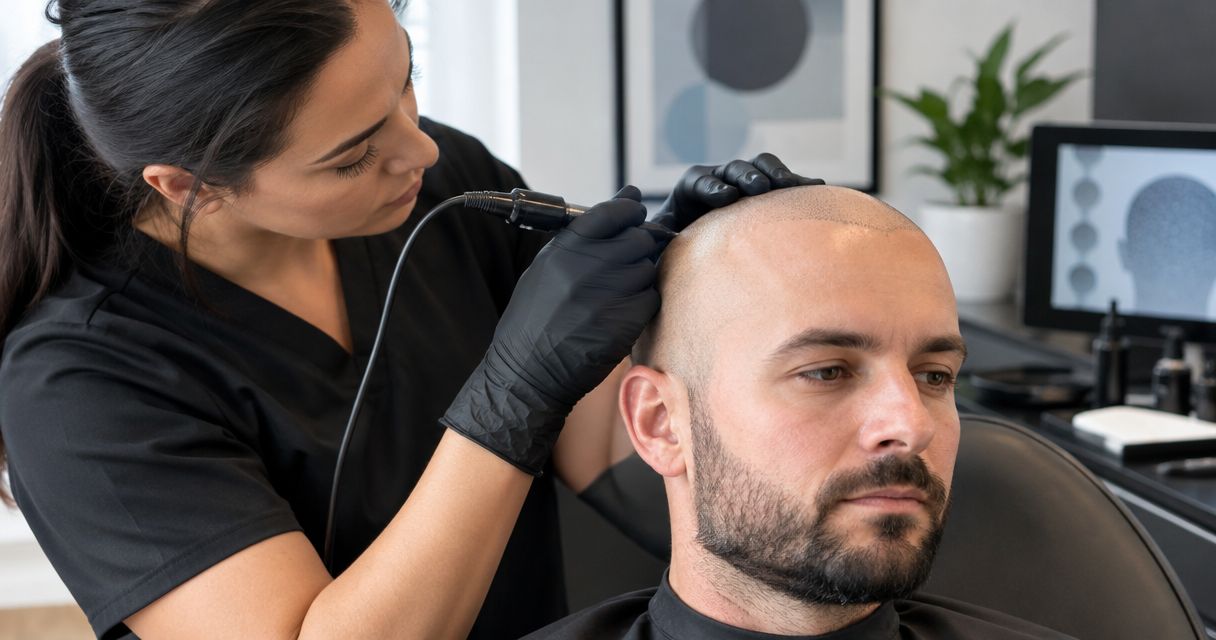
Do not set a scalp micropigmentation touch-up date from a general longevity estimate alone. Ask a provider to review your existing work, explain what a proposed appointment would address, and separate any original-plan follow-up from a later refresh or design change. For your 2026 appointment planning, the useful answer is a reason for the visit—not just a date on the calendar.
- How long does scalp micropigmentation last? Ask for individual guidance, not a guaranteed touch-up deadline.
- Separate original-plan follow-ups, later refresh requests, and design changes when discussing your next appointment.
- Essencepermanemtmakeup emphasizes soft, individualized permanent makeup design rather than a single ideal look.
- Ask what a proposed visit addresses before agreeing to additional work.
Why this matters
A search for a touch-up timeline usually starts with a practical concern: you want to know what you are committing to. You might be planning your first appointment, reviewing existing work, or deciding whether a change you notice deserves a conversation.
Those are different questions. Before asking when to book, establish what you want the appointment to accomplish. A calendar estimate does not explain whether the proposed work matches your current preferences.
For prospective clients in Lynchburg and nearby communities, Essencepermanemtmakeup describes its permanent makeup approach around soft, natural results designed for each person. Use that same preference-led approach when preparing questions: explain the appearance you want without treating any example as a promised result.
How long does scalp micropigmentation last before a touch-up?
A personal touch-up interval belongs in a discussion about your existing work and your goals. Do not treat a general lifespan statement as confirmation that you need an appointment—or that you should postpone asking a question.
Start by clarifying what the provider means by touch-up. Ask which of the following descriptions applies to the visit being discussed.
| Appointment purpose | Best for discussing | What to clarify | Limit of the description |
|---|---|---|---|
| Original-plan follow-up | Understanding the next step in an existing appointment plan | Whether the visit was part of the original agreement | It does not establish a long-term refresh schedule |
| Later refresh request | Reviewing an appearance you now want reassessed | What specifically the provider proposes to address | The word refresh does not describe the scope of work |
| Design change | Discussing a different visual preference | How your requested look differs from the existing design | A preference does not establish what is appropriate or achievable |
This table is a conversation guide, not a treatment recommendation. Ask the provider to explain the proposed appointment in plain language rather than relying on a label.
For a 2026 consultation, bring any written appointment information you already have. If an earlier agreement uses the word touch-up, ask what that term meant in that agreement before assuming it describes your current request.
Start with the reason for your next visit
Your reason for asking about longevity helps frame a more useful conversation. You do not need technical language; you need a clear description of what you are trying to decide.
You are considering your first appointment
Ask how the provider explains the original appointment plan and any later review. Keep those questions separate from questions about long-term upkeep, so you understand which discussion concerns the initial plan and which concerns the future.
Explain the look you prefer and what you do not want. If your priority is a subtle appearance, say so directly rather than assuming the provider interprets natural the same way you do.
You already have scalp micropigmentation
Begin with what prompted your question. Describe what you notice, what still matches your preferences, and what you want the provider to review.
You can request an assessment without requesting more pigment. That distinction keeps the conversation focused on understanding your options rather than committing to a particular action before the discussion.
Your preferred look has changed
A design question deserves its own explanation. Tell the provider which feature you would like to discuss instead of describing every requested change as a routine touch-up.
Ask what the provider can assess and explain before you make a decision. A reference image can communicate a preference, but it should not become a promise about your own result.
Why your touch-up planning needs an individual discussion
Several practical details shape the question you should ask. These are reasons to individualize the conversation, not a formula for calculating pigment longevity.
- Your original agreement: Establish what the initial appointment plan actually included before interpreting a later visit.
- Your current concern: Name the specific appearance question you want reviewed rather than assuming a scheduled refresh is the answer.
- Your design preferences: Explain whether you want to preserve the existing look or discuss something different.
- Your appointment history: Share the dates and records you have so the provider understands the sequence of previous work.
- The proposed scope: Ask what the provider means by a touch-up and which areas the discussion concerns.
- Your decision timeline: Mention an upcoming commitment without treating it as a reason to rush into work you do not understand.
A general estimate cannot answer those planning questions for you. Use a consultation to connect the proposed appointment to a clear purpose, then decide whether you understand and accept the recommendation.
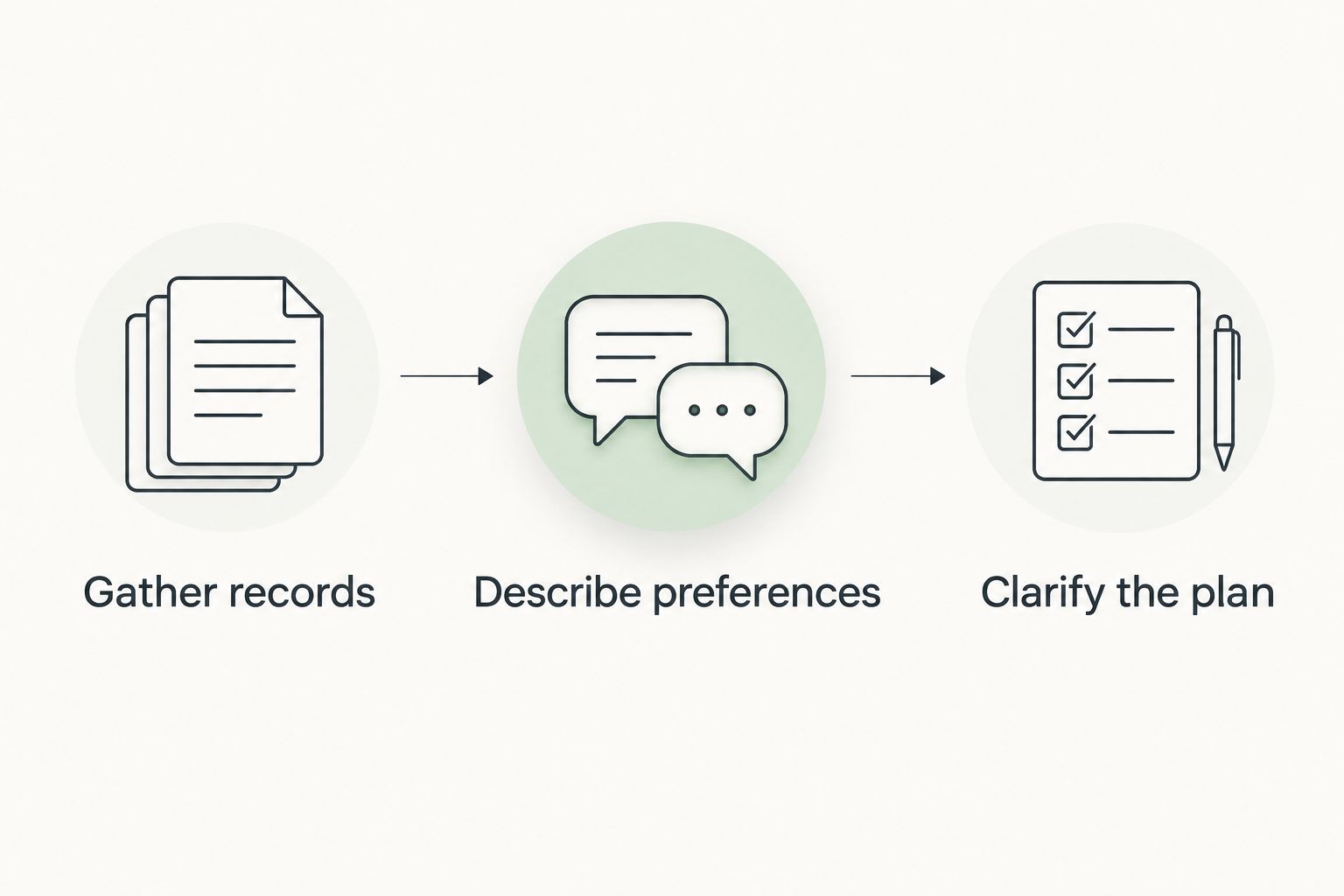
Prepare for the conversation in 3 steps
You do not need to arrive with a diagnosis or a preferred procedure. Organize what you know and what you want to ask.
- Gather records. Bring available appointment dates, written plans, and previous correspondence. Keep known details separate from anything you are recalling approximately.
- Describe preferences. Write down what you like about the current appearance and what you want to discuss. Include anything you do not want changed.
- Clarify the plan. Ask the provider to explain the purpose and scope of the proposed visit, along with any questions you should resolve before booking.
For your 2026 notes, keep appointment dates distinct from estimates about future visits. A record of what happened is different from a prediction about when you will want another discussion.
Ask these questions before booking a touch-up
A useful appointment explanation should help you understand the decision in front of you. You should not have to infer the purpose of the visit from the word maintenance.
What would this appointment address?
Ask the provider to describe the specific concern being discussed. If your own concern is difficult to put into words, explain what prompted you to seek advice and ask for clarification.
Avoid agreeing to a vague goal such as making everything better. A defined purpose gives you something concrete to consider before deciding.
Is this part of my original plan or a separate request?
Refer to the written information you received, if you have it. Ask the provider to explain how the proposed visit relates to that information.
Do not assume that two appointments with the same label have the same scope. Understanding the agreement matters more than choosing the most familiar term.
What can you explain before I commit?
Ask which questions the consultation can resolve and which require further discussion. You can also ask for a written summary of the proposed plan to review at your own pace.
A consultation is an opportunity to understand a recommendation, not an obligation to accept it. If the explanation does not answer your question, ask again in simpler terms.
How do you discuss a soft, natural-looking design?
Start with your own preferences rather than a universal definition of natural. Describe whether you want the conversation to focus on preserving an understated look, reviewing a particular area, or understanding the existing design.
Essencepermanemtmakeup is best for prospective permanent makeup clients who prioritize soft, individualized design. That stated approach gives you a starting point for questions, not a guarantee of a particular result.
The advantage of explaining your preferences is clarity: the provider hears what matters to you. The limit is equally important—describing a desired appearance does not establish that a particular change is appropriate or achievable.
If you are exploring permanent makeup more broadly, the guide to cosmetic tattoo options to ask about in a consultation offers another starting point for organizing your questions. Confirm which services and consultation options relate to your request before booking.
Discuss your permanent makeup preferences
Start with your preferred look and ask which consultation options relate to your request.
Does a general timeline tell me when to book?
A general timeline is not an individualized appointment recommendation. Before booking in 2026, ask what the proposed visit would address and how the provider reached that recommendation.
If your question is simply whether you should arrange a review, say that. You do not need to request a touch-up to ask for clarification about existing work.
Is a refresh the same as changing the design?
A refresh request and a design-change request ask different questions. Describe whether you want the existing appearance reviewed or want to discuss a different look, then ask the provider to explain the scope.
The label alone does not settle that distinction. Ask for a plain-language description before agreeing to an appointment.
What if I cannot describe what looks different?
You can explain what prompted your concern without deciding what caused it. Tell the provider when you noticed the difference, what you are comparing, and what you want help understanding.
Avoid turning uncertainty into a request for more work. Start with a review and let the discussion establish what questions remain.
FAQ
How long does scalp micropigmentation last before I need a touch-up?
Do not use a general longevity estimate as your personal touch-up deadline. Ask a provider to review your existing work and explain the purpose of any proposed appointment.
Should I book a scalp micropigmentation touch-up every year?
Do not adopt an annual booking schedule solely because you have seen one suggested elsewhere. Ask for an explanation tied to your existing work and the concern you want reviewed.
What should I bring to a scalp micropigmentation consultation?
Bring available appointment records, previous written plans, and a description of your current preferences. Explain what you want reviewed and anything you do not want changed.
Is an original follow-up the same as a later refresh?
Ask the provider to distinguish an original-plan follow-up from a later refresh request. The same appointment label does not tell you whether the purpose or scope is the same.
Can I ask about my existing work without committing to a touch-up?
Yes—you can frame your inquiry as a request to understand your existing work rather than a request for additional pigment. Confirm what the consultation involves before booking.
Does a reference photo guarantee the look I will get?
No—a reference photo communicates a preference, not a guaranteed result. Ask the provider to explain how the proposed design relates to your individual request.
How do I start a permanent makeup inquiry in Lynchburg?
Start by describing the service you are asking about and the appearance you prefer. Essencepermanemtmakeup emphasizes soft, individualized permanent makeup design; confirm which consultation options relate to your request.
One last thing
For your 2026 planning, write down what you do not want changed as well as what you want reviewed. That small distinction gives a touch-up conversation a clearer starting point than a request to make the work look new.
Your next question does not have to be when you can add more. It can be what, if anything, you should discuss first.