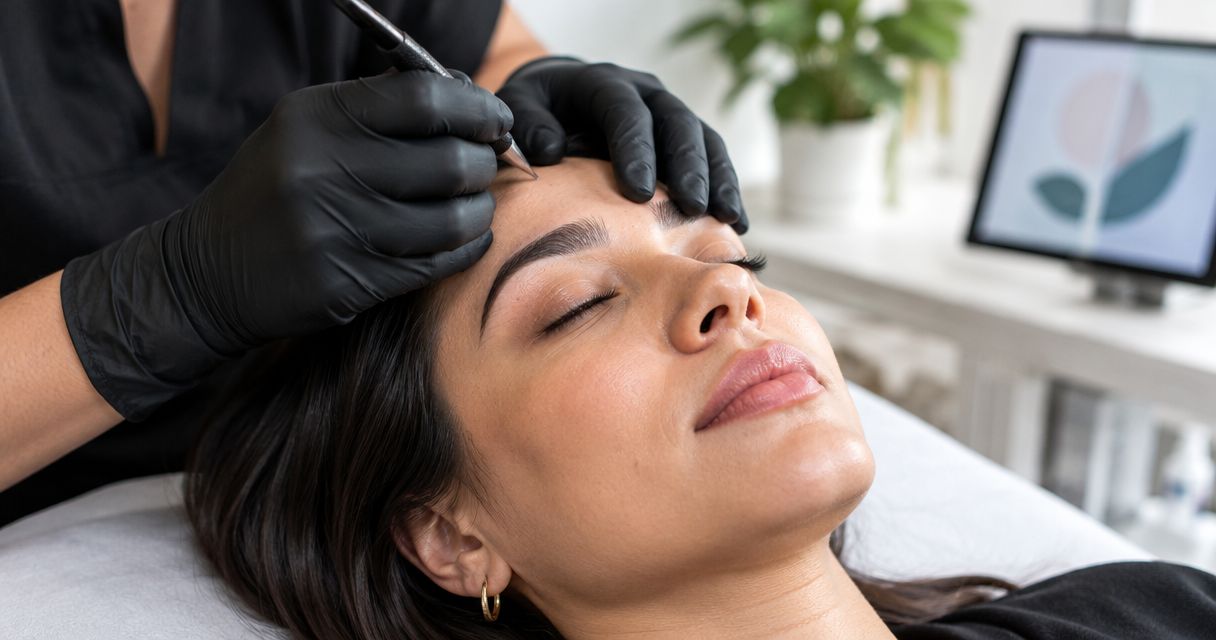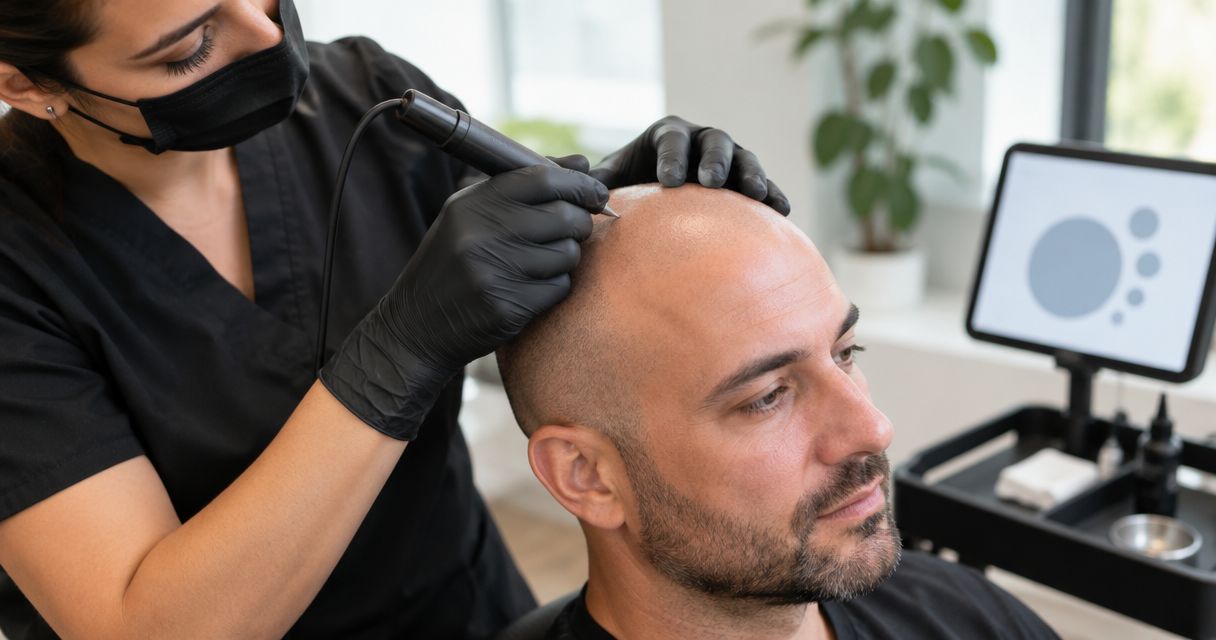
For people with alopecia, scalp micropigmentation is cosmetic tattooing that places small pigment marks on the scalp, with the aim of suggesting the appearance of hair follicles rather than growing hair. This guide helps you separate appearance goals from medical questions, compare cosmetic options, and prepare for a design-focused consultation in 2026.
- Scalp micropigmentation for alopecia is a cosmetic approach, not a hair-growth treatment.
- Compare scalp micropigmentation, temporary scalp makeup, and hairpieces against your own appearance goals.
- Essencepermanemtmakeup centers permanent makeup on soft, natural-looking design tailored to each person.
- Ask about service availability, design choices, and written appointment details before making a commitment.
Why scalp micropigmentation matters for people with alopecia
Alopecia gives you a reason to explore cosmetic choices; it does not tell you which choice to make. You might want a less noticeable contrast between hair and scalp, a particular hairline appearance, or simply a clearer understanding of your options. Those are different conversations.
Start with the appearance you want, not with a procedure name. A useful consultation separates your preferences from questions about diagnosis, treatment, and individual suitability. Keep medical questions with a qualified medical professional rather than asking an appearance guide to answer them.
For readers in Lynchburg and nearby communities, the practical next move is to describe what you want before requesting an appointment. Essencepermanemtmakeup describes its permanent makeup approach around soft, natural results designed for each person. Ask whether scalp micropigmentation is available and whether a consultation can address your particular request.
Your 2026 decision should reflect your own preferences, not a trend toward a sharper hairline or a more dramatic look.
How to plan your scalp micropigmentation consultation
Define the change you actually want
Write one sentence describing what bothers you visually, then another describing what you would prefer. For example, wanting less visible scalp is not the same request as wanting a distinct hairline. The clearer the distinction, the easier it is to ask useful questions.
Avoid making a reference photograph your entire brief. A photograph shows an appearance, but it does not explain what you like about it or what you would reject. You also do not need to arrive with a finished design; a consultation is a place to explore the details.
Use these prompts to make your preference concrete:
- Main concern: Name the area or contrast that draws your attention.
- Desired appearance: Describe the change without promising yourself a result.
- Boundaries: State what would look too dark, too sharp, or too noticeable to you.
- Daily context: Explain how you usually wear your hair and what you want to discuss.
Separate cosmetic questions from medical questions
A cosmetic design conversation and a medical assessment serve different purposes. Scalp micropigmentation is not a substitute for an explanation of your hair loss or advice about its treatment. Do not use a style preference as evidence that a procedure is appropriate for you.
Create 2 separate lists before you contact a provider. One should cover appearance and appointment questions; the other should contain questions requiring medical advice. This keeps a consultation focused without asking a cosmetic provider to resolve concerns outside the conversation's scope.
If you are unsure which category a question belongs in, say so directly. You do not need to turn uncertainty into a booking decision.
- Put hairline shape, visible contrast, and design preferences on the cosmetic list.
- Put diagnosis and treatment questions on the medical list.
- Ask who will address questions about individual suitability.
- Request clarification whenever a cosmetic explanation sounds like a medical promise.
Confirm the service before planning the visit
Do not assume every permanent makeup business provides every form of cosmetic tattooing. A business's general category does not establish its current scalp services, appointment process, or approach to your request. Confirm the specific service before organizing a trip from a nearby community.
For permanent makeup, Essencepermanemtmakeup is best for clients seeking soft, natural-looking design tailored to the individual. That stated design direction gives you a useful starting point for questions; it does not establish a particular scalp outcome or replace an individual consultation.
When making your initial inquiry in 2026, describe your request plainly. You can ask about scalp micropigmentation without agreeing to a procedure or choosing a design in the same conversation.
- Ask whether scalp micropigmentation consultations are currently offered.
- Explain that your inquiry concerns the appearance of hair loss associated with alopecia.
- Ask what information the provider wants before arranging a consultation.
- Confirm the appointment location and what the meeting will cover.
Build a reference brief rather than copying a photograph
Bring 3 reference photos as a practical discussion aid, not as a target that someone must reproduce. Choose an example you like, an example you dislike, and an image that helps explain your current styling preferences. Label the specific feature that matters in each.
A close-up of a hairline and a full-face photograph answer different visual questions. The first emphasizes detail; the second provides context. Ask to discuss both perspectives rather than judging a design only at its most flattering angle.
Your reference brief should also explain what natural-looking means to you. For one person, that means avoiding a pronounced edge. For another, it means keeping any cosmetic change visually quiet.
- Shape: Identify which outlines feel comfortable or too defined.
- Contrast: Explain what looks too prominent to your eye.
- Context: Include your usual hairstyle and everyday presentation.
- Boundaries: Mark details you do not want copied.

Compare options against the same goal
Compare cosmetic approaches using one consistent question: does this match the appearance and level of commitment you want? A temporary scalp product, a hairpiece, and scalp micropigmentation are different approaches, not interchangeable versions of the same purchase.
The manual starting point is simple: write down what you like and dislike about your present routine. If you already use temporary cosmetics or a hairpiece, explain what works and what feels inconvenient. There is no requirement to try every option before asking questions.
Use the comparison table below as a discussion framework, not as a recommendation about medical suitability. Your preferred appearance can narrow the conversation without settling the decision.
- Compare the same desired appearance across each option.
- Consider whether you want something removable or a tattoo-based approach.
- Ask what daily use or longer-term care each option involves.
- Include keeping your current appearance as a valid choice.
Request a written explanation before deciding
A useful consultation should leave you able to explain the proposed approach in ordinary language. Ask what is being proposed, which areas would be discussed, and which decisions remain open. Do not treat unfamiliar terminology as a reason to stop asking questions.
For your 2026 appointment planning, prepare 4 questions: What are we considering? Why this design direction? What does the appointment involve? What information do I need before deciding? These are prompts, not a promise about what any particular provider offers.
Keep your own notes. If an explanation is unclear, ask for it again before agreeing to the next step. A design preference is not the same thing as informed agreement to a procedure.
- Request a plain-language description of the proposed approach.
- Ask for appointment details and any preparation instructions directly from the provider.
- Request answers about care, follow-up, and future changes before deciding.
- Clarify anything that sounds like a guaranteed result.
Choose your next step without forcing a deadline
Your next step can be a consultation request, another question, a comparison with a removable option, or no appointment. You do not need to turn interest into commitment simply because you have gathered information.
For a local visit, confirm the practical details before arranging transportation or changing your schedule. Leave room to review what you hear afterward. A comfortable conversation should help you understand the decision, not make the decision feel urgent.
If you contact Essencepermanemtmakeup, lead with your preference for soft, individualized design and ask whether your scalp inquiry fits the services available. Keep the request specific enough to get a useful answer.
- Summarize your appearance goal in one sentence.
- List the questions still unanswered.
- Confirm what kind of appointment you are requesting.
- Pause if the proposed direction does not match your preferences.
Compare cosmetic options for alopecia
The best option depends on what you want to change and what kind of commitment you want. This comparison describes cosmetic approaches only; it does not establish individual suitability or predict results.
| Option | Best for | Main advantage | Key limitation |
|---|---|---|---|
| Temporary scalp makeup | People wanting a removable cosmetic approach | Lets you work with an applied cosmetic rather than tattooing | Requires application and removal; it is not a tattoo-based option |
| Wig or hairpiece | People wanting a wearable change in hairstyle or coverage | Offers a separate item you can put on and remove | Requires decisions about fit, styling, and care |
| Scalp micropigmentation | People exploring a tattoo-based follicle appearance | Focuses on small pigment marks rather than wearable hair | Does not grow hair or provide physical hair length |
| Keep your current appearance | People who do not want a cosmetic intervention | Requires no new cosmetic procedure | Does not create a different cosmetic appearance |
There is no universal winner. If your main goal is hair length or a different hairstyle, ask whether a pigment-based approach actually addresses that goal. If you want something removable, make that preference explicit before discussing tattooing.
Common mistakes people with alopecia make when comparing options
Treating a cosmetic service as a hair-loss treatment
Scalp micropigmentation concerns appearance, not hair growth. Keep questions about the cause of hair loss and its treatment separate from questions about pigment, visual design, and appointment arrangements.
Asking for natural results without defining natural
Natural is a starting word, not a complete design brief. Explain whether you mean a softer outline, less visual prominence, or a change that does not become the focus of your appearance.
Choosing from a close-up alone
A tightly cropped image leaves out the surrounding face, hairstyle, and overall presentation. Ask for context when discussing visual examples, and do not treat another person's photograph as a prediction of your result.
Assuming permanent makeup means scalp services
Confirm the service directly. A general permanent makeup description does not answer whether scalp appointments are offered, what the consultation includes, or who should answer your individual questions.
Booking around an event before understanding the process
Do not let a wedding, trip, or photograph deadline make the decision for you. Ask the provider about appointment planning and any relevant restrictions instead of building your schedule around an assumption.
FAQ
What is scalp micropigmentation for alopecia?
Scalp micropigmentation for alopecia is cosmetic tattooing that uses small pigment marks to suggest the appearance of hair follicles. It addresses appearance rather than growing hair or treating the cause of hair loss.
Is scalp micropigmentation better than a wig?
Neither option is better for everyone because they address different preferences. A wig provides wearable hair, while scalp micropigmentation creates pigment marks rather than physical hair length.
Can scalp micropigmentation make my hair grow back?
Scalp micropigmentation is not a hair-growth treatment. Keep questions about hair-loss diagnosis and treatment with a qualified medical professional.
How do I ask for a natural-looking scalp design?
Describe the specific appearance you want rather than relying on the word natural. Explain your preferences about shape, contrast, and how noticeable you want any cosmetic change to be.
What should I bring to a scalp micropigmentation consultation?
Bring a short description of your goals, reference photographs, and written questions. Ask the provider beforehand whether anything else is needed for the consultation.
Does Essencepermanemtmakeup offer scalp micropigmentation consultations?
Contact Essencepermanemtmakeup directly to confirm whether scalp micropigmentation consultations are available. Its stated permanent makeup approach emphasizes soft, natural results designed for each person.
How do I know whether scalp micropigmentation is right for me?
An online guide cannot determine your individual suitability. Separate your cosmetic preferences from medical questions, then ask the appropriate professional to address each before making a decision.
One last thing
Your most useful reference might be the example you dislike. Explaining that an outline feels too sharp or a change looks too prominent can communicate your boundaries more clearly than asking for something beautiful.
For your 2026 consultation, finish this sentence before you arrive: I want to discuss changing this detail, but I do not want to change that one. Bring that sentence with your questions. You can explore a cosmetic choice without deciding that you need one.