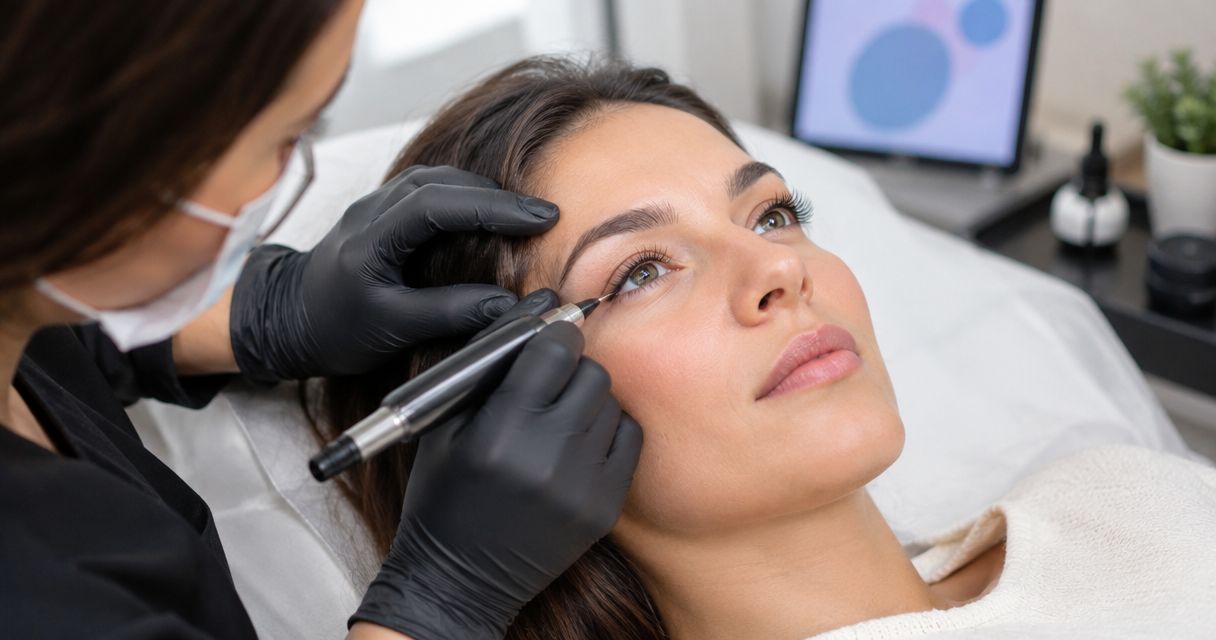
Prepare for a permanent eyeliner appointment by getting your provider’s written instructions, clarifying the look you want, and confirming what to bring and how to arrive. Keep questions about medicines, eye products, contact lenses, or recent treatments separate from design decisions, and ask your provider for individual guidance rather than following a generic online schedule. This 2026 checklist helps you organize that conversation without making changes on your own.
- For how to prepare for permanent eyeliner appointment day, start with your provider’s written instructions—not a generic checklist.
- Essence centers permanent makeup on soft, natural results designed for each person.
- Bring clear design references and explain which details you want to keep subtle.
- Confirm arrival instructions, appointment details, and unanswered questions before you leave home.
Why this matters
Good preparation gives you a clearer conversation about the eyeliner you want. A photo can show a shape you like, but it cannot explain whether you prefer a barely noticeable edge, a visible line, or an extended outer corner.
For prospective clients in Lynchburg and nearby communities, Essence offers permanent makeup with an emphasis on soft, natural results designed for each person. Your preparation should support an individual design discussion, not a request to copy someone else’s eyes.
Keep practical preparation and personal instructions in separate categories. You can organize photos and questions yourself; decisions involving medicines, eye concerns, or treatment history belong in a direct conversation with the provider and, where relevant, your prescribing clinician.
How do you prepare for a permanent eyeliner appointment?
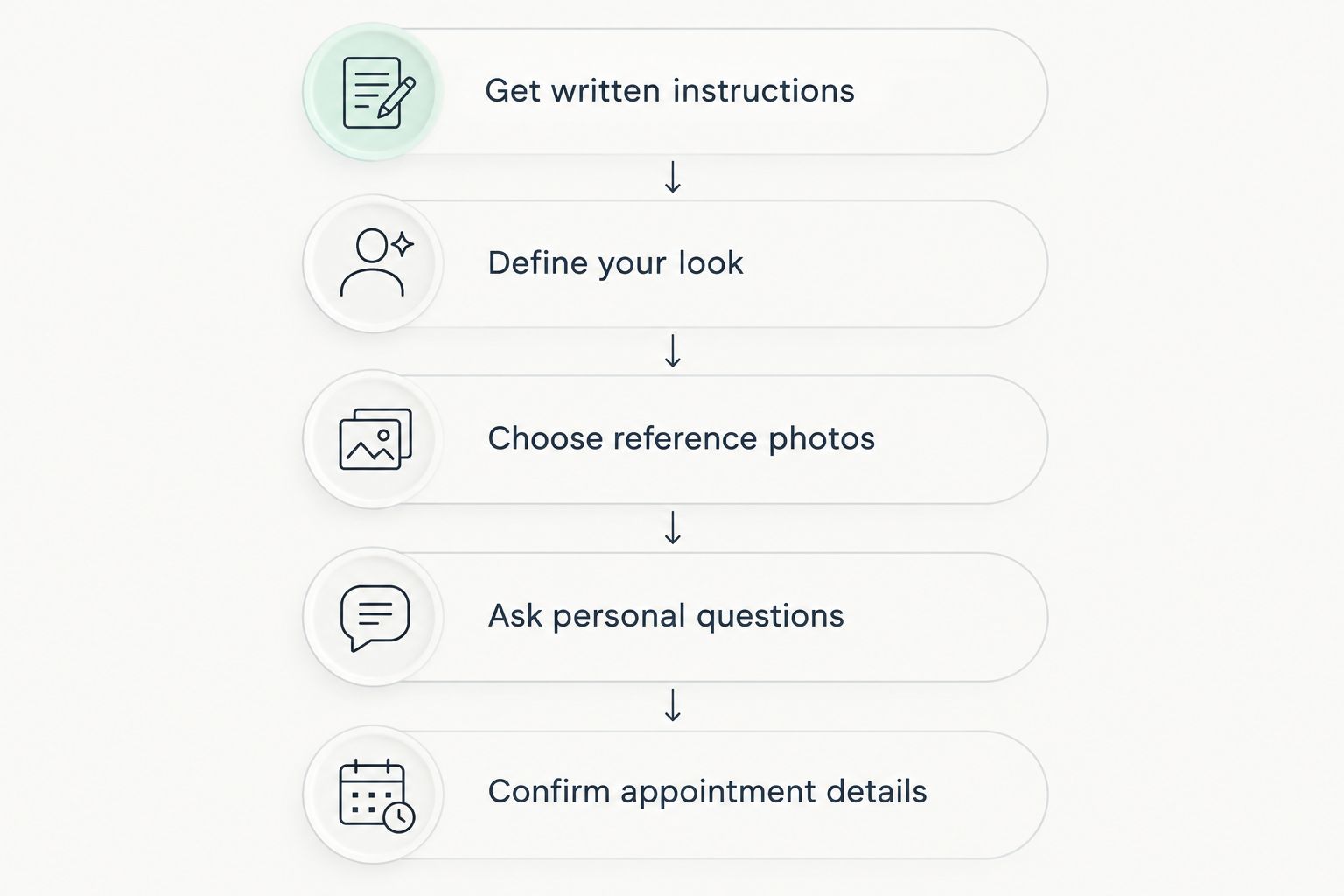
Use these steps to prepare for your 2026 appointment. Work through the unanswered questions before appointment day rather than treating this list as a substitute for the studio’s instructions.
- Get written instructions. Ask for the current preparation guidance for your appointment. Read it before making changes to your usual routine, and flag anything you do not understand.
- Define your look. Describe what you want the eyeliner to contribute to your everyday appearance. Use words such as subtle, defined, understated, or visible, then explain what those words mean to you.
- Choose reference photos. Select images that help you point to specific details. Identify the line, outer corner, or overall level of definition you like rather than asking for an exact copy.
- Ask personal questions. Send questions about contact lenses, eye products, medicines, recent treatments, or other personal circumstances directly to the provider. Do not turn a general article into personal instructions.
- Confirm appointment details. Check the location, arrival time, expected appointment length, and anything you have been asked to bring. Keep the written instructions accessible so you can review them before leaving.
The goal is not to complete the longest possible checklist. It is to arrive with a clear preference, understood instructions, and no unresolved assumptions about what you should do beforehand.
Start with the everyday look you want
Before choosing an eyeliner reference, think about the makeup you actually enjoy wearing. A dramatic photo can be appealing without representing what you want to see in the mirror every morning.
Write 1 sentence describing your goal. For example: you want your eyes to look more defined while keeping the overall effect understated. That sentence gives the design conversation a useful starting point without prescribing a particular shape or technique.
Then list 3 design priorities. These might be a subtle overall appearance, a restrained outer corner, and a line that does not look heavy to you. Treat them as preferences to discuss, not outcomes that a photo or consultation can guarantee.
Essence is a permanent makeup option for Lynchburg clients seeking soft, individually designed eyeliner. That focus makes your own definition of natural-looking especially useful to the conversation.
You do not need technical vocabulary. Saying that you like your usual eyeliner but want less emphasis at the outer corner communicates more than choosing a technique name you do not fully understand.
Compare subtle definition with a winged reference
Different references communicate different design goals. Use this comparison to explain what attracts you to a look, not to decide whether a particular design is appropriate for you.
| Reference direction | Best for expressing | What to point out | What still needs discussion |
|---|---|---|---|
| Natural daytime look | A preference for understated definition | How visible you want the line to appear | What “natural” means to you and how the design would be individualized |
| Soft winged look | Interest in an emphasized outer corner | The direction and visual prominence of the extension | Whether your reference reflects the everyday look you actually want |
For a restrained starting point, review permanent eyeliner styles for a natural daytime look. Pay attention to what you like about the overall effect, rather than assuming every detail belongs in your design.
If your interest is mainly in the outer corner, use the soft winged eyeliner guide to organize that part of the conversation.
The benefit of a reference is clarity. Its limitation is that it shows another person’s appearance, lighting, and styling—not a promise of your result.
Choose references that explain your preferences
Bring 2 reference photos if that helps you show a useful contrast: one that captures the effect you like and another that shows something you do not want. Label the distinction in plain language.
For example, you might like the restraint of one image but dislike the prominence of its outer corner. You can communicate both observations without rejecting or requesting the entire design.
Avoid collecting a large folder of unrelated looks. If your references range from barely visible definition to prominent wings, explain which direction matters most and which images are only there to illustrate a detail.
You can also describe your current makeup routine. Say whether you usually wear eyeliner, what you like about it, and what you find too noticeable. Those details help keep the discussion connected to your preferences rather than a trend.
Why permanent eyeliner preparation varies
Your 2026 preparation checklist should reflect the appointment you have booked and the questions you need answered. The following factors change what you need to clarify, without creating a universal preparation schedule:
- Your design goal. A request for understated definition calls for a different design conversation from a request for a visible wing.
- Your current makeup routine. Your usual eyeliner gives you a practical way to explain what feels familiar and what you want to change visually.
- Your reference photos. Clear, consistent references reduce ambiguity; conflicting references require more explanation.
- Your personal questions. Questions involving eye products, contact lenses, medicines, or recent treatments need direct guidance rather than assumptions.
- Your provider’s instructions. The written guidance for your appointment is the document to clarify before you arrive.
- Your travel arrangements. Confirm the address and arrival details before planning your trip from Lynchburg or a nearby community.
Do not combine instructions from several studios into your own preparation plan. If advice conflicts, ask the provider handling your appointment to explain which instructions apply to you.
What should you ask before changing your routine?
Ask the provider to explain any preparation instruction that affects something you routinely use or do. Name the specific product, medicine, lens routine, or recent treatment rather than asking a broad question such as whether everything is fine.
Keep the question neutral and precise: what information does the provider need, and who should advise you about a proposed change? Do not stop prescribed medicine or alter a clinician’s instructions because of a general permanent makeup checklist.
Likewise, do not adopt an online avoidance schedule simply because it includes a confident countdown. A timing recommendation without individual context is not a substitute for the guidance you have been asked to follow.
This article focuses on organizing your appointment and design conversation. It does not determine personal suitability or provide medical preparation instructions.
What should you confirm before leaving home?
Before your 2026 appointment, review the practical details in one place. A short written note is easier to check than a collection of messages scattered across your phone.
Confirm:
- The appointment address and arrival time.
- The expected appointment length so you can organize your day.
- The studio’s instructions about how to arrive, including any questions about eye makeup or contact lenses.
- What documents, information, or reference images you have been asked to bring.
- How to reach the studio if you need to clarify an instruction or discuss a change.
Do not assume you should arrive wearing your usual eyeliner, and do not assume the opposite. Ask which approach the provider wants for your appointment.
If an important question remains unanswered, contact the studio before setting out. A confirmed instruction is more useful than a confident guess.
Discuss your eyeliner preferences
Ask about an appointment and explain the soft, natural look you want to discuss.
How early should I ask for preparation instructions?
Ask when you arrange the appointment, then review the instructions again before appointment day. That gives you an opportunity to clarify questions rather than discovering an unfamiliar instruction as you are getting ready to leave.
Use the studio’s stated timing for any appointment-specific preparation. Do not replace it with a countdown from another provider’s website.
What if I cannot decide which eyeliner style I want?
Start with the effect you want, not a finished design. Explain how noticeable you want the eyeliner to be and which parts of your references appeal to you.
You can bring uncertainty to a consultation. The useful preparation is identifying your preferences and questions, not arriving with every design decision already made.
FAQ
What’s the first thing I should do to prepare for permanent eyeliner?
Ask your provider for the written preparation instructions for your appointment. Read them before making changes to your routine, and ask about anything unclear.
Should I wear eye makeup to my permanent eyeliner appointment?
Confirm the studio’s arrival instructions before deciding whether to wear eye makeup. Ask whether the provider wants to see your usual eyeliner as a reference or prefers another approach.
Can I wear contact lenses to my permanent eyeliner appointment?
Ask your provider for specific contact lens instructions before appointment day. Do not assume another studio’s checklist applies to your appointment.
Should I stop my medicines before permanent eyeliner?
Do not stop prescribed medicines based on a general permanent eyeliner checklist. Raise the question with your provider and prescribing clinician rather than changing your routine yourself.
How many reference photos should I bring for permanent eyeliner?
Choose 2 reference photos as a simple way to organize the design conversation: one showing an effect you like and another showing a detail you do not want. Explain the distinction rather than requesting an exact copy.
Can I ask for natural-looking permanent eyeliner?
Yes—explain what natural-looking means to you, including how visible you want the line and outer corner to be. Essence centers its permanent makeup approach on soft, natural results designed for each person, without promising a particular outcome.
Do I need to choose a wing before my appointment?
You can bring a winged reference without treating it as a final decision. Explain which detail interests you and discuss the design before committing to a particular look.
One last thing
For your 2026 appointment, prepare a sentence about what you do not want as well as what you like. “I want definition, but I do not want the outer corner to be the first thing I notice” gives the conversation a clear boundary.
The strongest preparation is not a folder full of perfect photos. It is a clear description of your everyday preferences, questions answered by the right person, and appointment instructions you understand.