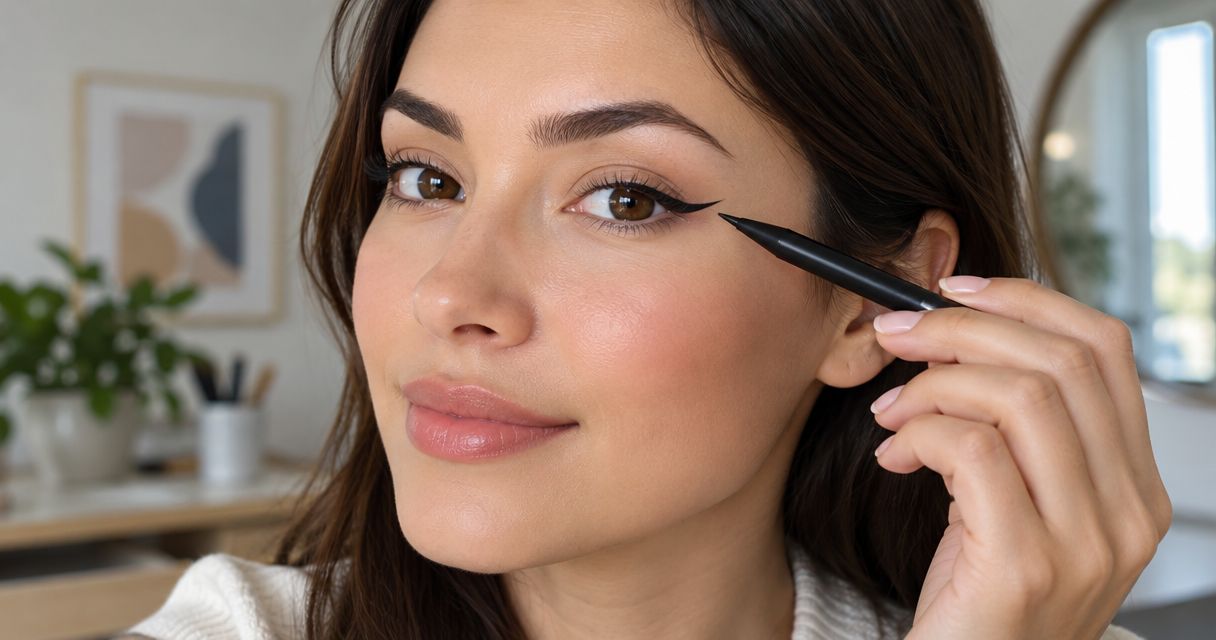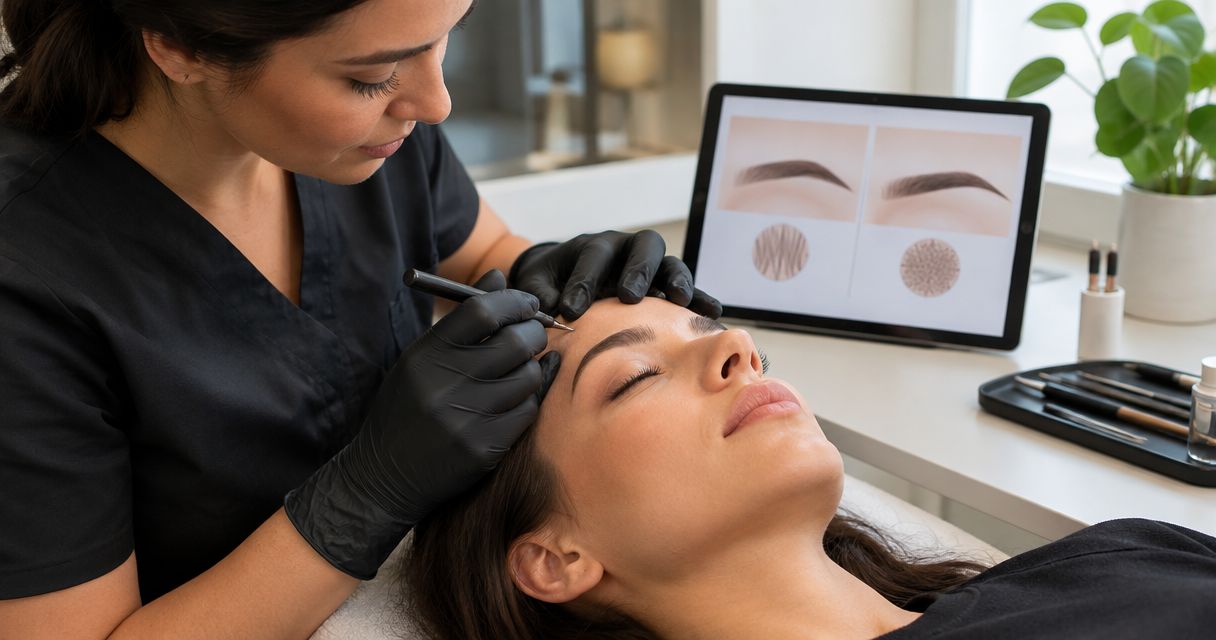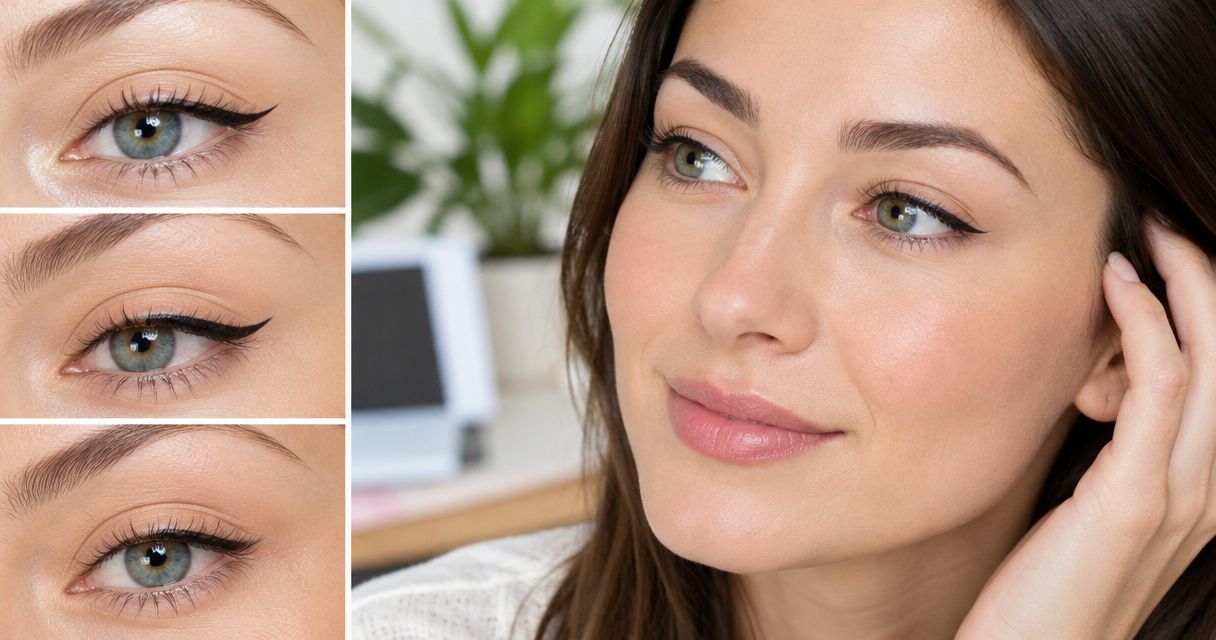
Best overall: lash-line enhancement. Best for a visible but restrained line: fine upper-lid liner. Best for a softer makeup effect: softly shaded liner. The best natural permanent eyeliner style starts with how little—or how much—definition you want to notice on an ordinary day.
- Lash-line enhancement is the best natural permanent eyeliner style reference for understated daytime definition.
- Fine upper-lid liner suits readers who want a visible line without making a wing the focus.
- Softly shaded liner is a reference for diffused edges, not a promise of an invisible makeup effect.
- Essencepermanemtmakeup centers soft, natural permanent makeup on individualized design rather than one standard look.
Why this matters
Natural does not describe one eyeliner shape. For you, it might mean definition close to the lashes; for someone else, it means a small, visible line that resembles their everyday makeup.
Essencepermanemtmakeup centers soft, natural results designed for each person. Start with your preferred amount of visible makeup, then use a consultation to discuss the design rather than choosing from a trend name alone.
Essencepermanemtmakeup is best for prospective permanent makeup clients who prioritize soft, individualized design. The styles below are visual references for that conversation, not a statement that every design is offered or appropriate for every person.
For this 2026 guide, the ranking prioritizes understated daytime appearance. It does not rank providers, techniques, or medical suitability.
What makes the best natural permanent eyeliner style?
Use these criteria before comparing the options. A style name alone does not tell you how prominent the finished design is intended to look.
- Line placement: Decide whether you want the emphasis close to the lash line or visibly above it.
- Visible width: Describe whether you want barely noticeable definition or a recognizable eyeliner line.
- Edge softness: Compare a clearly outlined edge with a diffused makeup effect.
- Outer shape: Decide whether the design should stop without a flick or include a deliberate outer extension.
- Everyday balance: Judge the reference with the amount of brow, lip, and eye makeup you usually wear.
These criteria work together. A narrow line with a noticeable wing expresses a different preference from a narrow line without one, even when both are described as subtle.
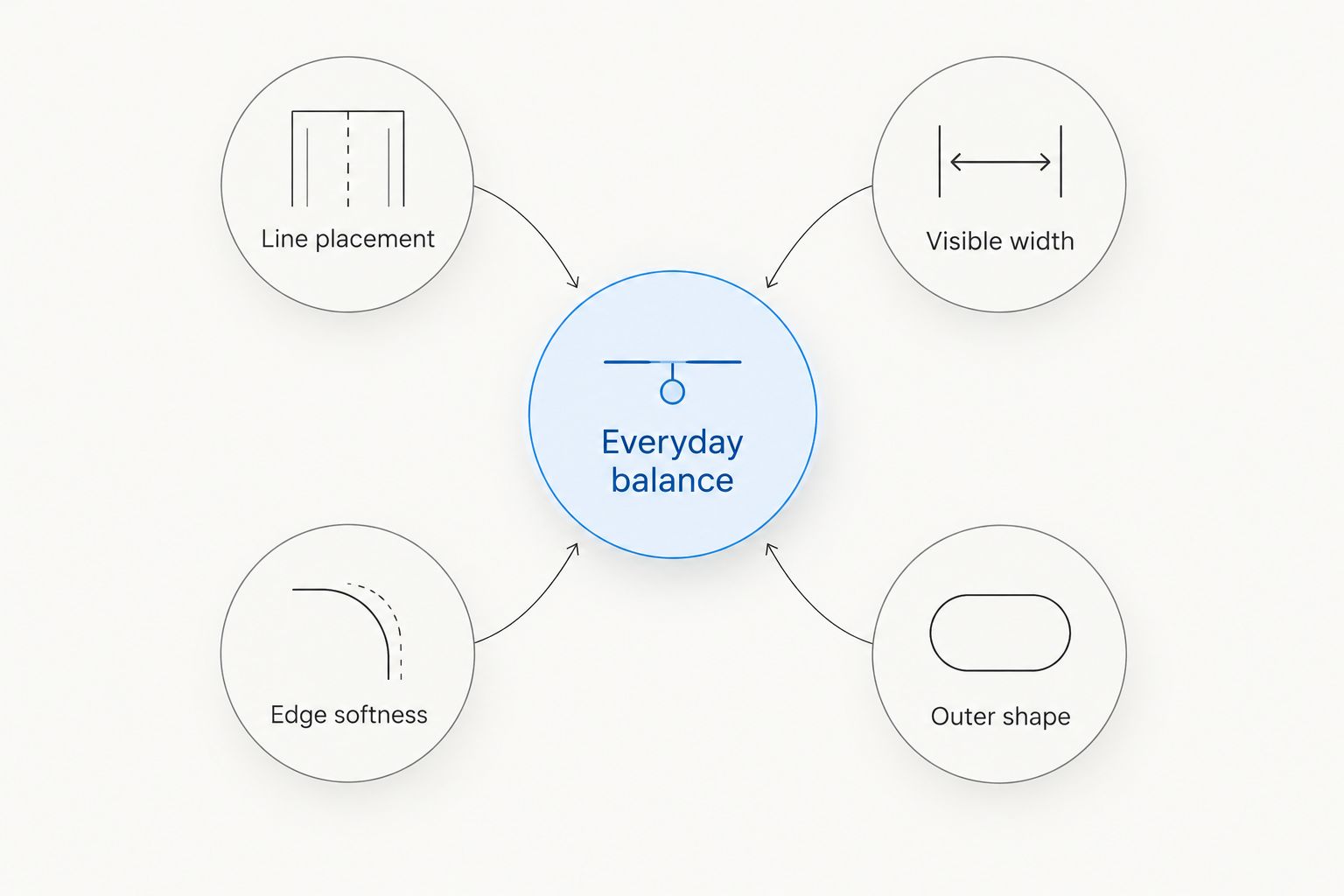
Natural eyeliner styles at a glance
The order below reflects one priority: an understated daytime look. A lower-ranked option is not inherently worse; it simply introduces a more specific visual preference.
| Style reference | Best for | Standout design feature | Key limitation |
|---|---|---|---|
| Lash-line enhancement | Minimal visible makeup | Emphasis closely associated with the lash line | Does not match a preference for a clearly visible eyeliner band |
| Fine upper-lid liner | A recognizable everyday line | A narrow, defined upper outline | Has a more visible edge than lash-line emphasis |
| Softly shaded liner | A diffused makeup look | Softness around the visible edge | Diffusion does not necessarily mean less noticeable makeup |
| Petite outer wing | A deliberate outer flick | A small extension beyond the main line | Makes a specific shape part of the design |
| Lower-lash accent | Definition beneath the eye | An additional lower-eye emphasis | Adds a design element that minimalists might not want |
1. Lash-line enhancement: best for minimal visible makeup
Lash-line enhancement is the strongest starting reference when you want the impression of definition rather than a separate eyeliner shape. The visual emphasis sits close to the lashes instead of making a broad upper line or wing the main feature.
For a natural daytime brief, describe what you do not want as clearly as what you do: no prominent band, no obvious flick, and no dramatic outline. That gives the conversation more direction than simply asking for natural eyeliner.
Lash-line enhancement pros:
- Keeps the design conversation focused on subtle definition.
- Provides a reference without making a wing essential.
- Matches a preference for little visible eye makeup.
Lash-line enhancement cons:
- Does not match a goal of clearly visible eyeliner.
- The name alone leaves the intended width and outer ending unclear.
Best for: You want your eyes to look defined without choosing an obvious makeup shape as the focal point.
In your 2026 consultation notes, write down whether you want to see a distinct line when looking straight ahead. That distinction helps separate lash-line emphasis from a fine upper-lid design.
Verdict: Choose lash-line enhancement as your first reference for the most understated brief.
2. Fine upper-lid liner: best for a recognizable everyday line
Fine upper-lid liner makes the line itself part of the look. It is the clearer reference when you enjoy wearing eyeliner but prefer a restrained outline over a broad band or pronounced wing.
The important distinction is visible width. Ask to discuss a narrow upper line and its ending separately, rather than assuming that fine liner automatically includes a flick.
Fine upper-lid liner pros:
- Gives you a clear way to describe visible eyeliner.
- Separates line definition from the decision about a wing.
- Fits a brief built around a simple upper-eye outline.
Fine upper-lid liner cons:
- Looks more intentionally made up than lash-line emphasis.
- A fine line is not the same as an invisible line.
Best for: You already like the appearance of a narrow upper eyeliner line in your daytime makeup.
Bring a reference that shows the whole eye area, not only a tightly cropped line. The broader view helps you explain whether the reference still looks restrained alongside the brows and other makeup.
Verdict: Choose fine upper-lid liner when you want the eyeliner to be visible, just not dominant.
3. Softly shaded liner: best for a diffused makeup effect
Softly shaded liner is a reference for an edge that looks less sharply outlined. Think about softness of finish separately from the overall size of the design: a diffused area can still look noticeable.
This option belongs in the conversation when your favorite everyday reference resembles softly blended pencil rather than a crisp liquid line. Explain whether you like the softened edge, the amount of shading, or both.
Softly shaded liner pros:
- Gives you language for a less sharply defined edge.
- Matches a preference for a blended makeup appearance.
- Encourages a separate discussion of softness and width.
Softly shaded liner cons:
- A shaded effect is not automatically a minimal effect.
- The word soft does not specify how much visible shading you want.
Best for: You prefer a diffused makeup edge to a clearly drawn outline.
When comparing 2026 inspiration photos, do not treat soft, subtle, and narrow as interchangeable words. One describes the edge, another describes your overall impression, and the last describes width.
Verdict: Choose softly shaded liner as a reference only when diffusion—not simply less eyeliner—is your priority.
4. Petite outer wing: best for a deliberate outer flick
A petite outer wing introduces a small extension beyond the main upper line. That makes the outer shape a deliberate part of the look rather than a detail left undecided.
Choose this reference because you consistently like a flick, not because a photo labels it natural. Even a restrained wing expresses a more specific makeup preference than a line without one.
Petite outer wing pros:
- Makes your preferred outer shape explicit.
- Provides a reference for a small, intentional flick.
- Separates an outer extension from a wider upper line.
Petite outer wing cons:
- Adds a visible shape that is absent from a no-wing brief.
- A close-up photo does not show how you feel about the whole look.
Best for: A small outer flick is already part of the makeup appearance you enjoy.
Compare 2 reference versions: one with the flick and one without it. Treat this as a preference exercise, not proof that either design is suitable for you.
Verdict: Keep the petite wing on your shortlist only if the outer flick is something you actively want.
5. Lower-lash accent: best for intentional lower-eye definition
A lower-lash accent adds emphasis beneath the eye. It is a separate design choice, not a necessary companion to upper eyeliner.
If your goal is minimal daytime makeup, begin by deciding whether you want lower-eye definition at all. Do not include it simply because it appears in the same reference photo as an upper style you like.
Lower-lash accent pros:
- Gives a name to your preference for lower-eye emphasis.
- Lets you discuss upper and lower design choices separately.
- Provides a reference when lower liner is part of your usual look.
Lower-lash accent cons:
- Adds another visible element to a minimal brief.
- Does not match a preference for upper-only definition.
Best for: You deliberately prefer definition beneath the eye, rather than wanting it as an automatic addition.
Look at the lower detail on its own, then consider the whole face. Explain whether that extra emphasis is essential to the appearance you want.
Verdict: Leave lower-lash accent off a minimal shortlist unless you specifically want it.
How these styles are ranked
This ranking uses the design criteria above: placement, visible width, edge softness, outer shape, and everyday balance. Lash-line enhancement comes first because its brief centers definition close to the lashes rather than an additional eyeliner shape.
Fine upper-lid liner follows for readers who want a visible outline. Shading, a wing, and lower-eye emphasis answer more particular preferences; they are not automatic upgrades.
The 2026 ranking is an editorial guide to describing appearance, not a treatment recommendation. At Essencepermanemtmakeup, the stated emphasis is individualized design rather than one ideal look for everyone.
Turn your preference into a consultation brief
You do not need technical vocabulary to explain your goal. A few carefully chosen references are more useful than a large collection of images with conflicting designs.
Choose your references
Bring 3 reference photos: one you like, one that looks too noticeable, and one showing your usual makeup. Label the detail that matters in each, such as width, edge, or outer ending.
Avoid assuming that every part of a favorite image belongs in your brief. You can like its narrow line while disliking its wing.
Write your main preference
Describe your goal in 1 sentence using your own words. Include the amount of visible definition you want and whether an outer flick belongs in the design.
Then add your strongest boundary. Perhaps you do not want a broad line, a shaded effect, or lower-eye emphasis; naming that boundary keeps the discussion specific.
Ask what the design means for you
Ask how the proposed design relates to the reference and which details need further discussion. Keep questions about the procedure, individual suitability, and expectations separate from this visual style guide.
For prospective clients in Lynchburg and nearby communities, a consultation request is the next step toward discussing those individual details. You do not need to arrive having selected a final design.
Discuss your eyeliner preferences
Start with the amount of definition you want and the design details you prefer to avoid.
Which natural permanent eyeliner style should you choose?
Start with lash-line enhancement if you are undecided and your priority is minimal visible makeup. Move fine upper-lid liner to the top of your list if you specifically want to see an eyeliner line.
Choose the other references for a stated reason: shading for a diffused edge, a petite wing for an outer flick, or lower-lash accent for lower-eye emphasis. Do not add details merely to make the design feel more complete.
Your 2026 shortlist should describe your ordinary-day preference, not just your favorite dressed-up photo. Essencepermanemtmakeup's emphasis on soft, individualized permanent makeup makes that personal brief the useful starting point.
FAQ
What's the best natural permanent eyeliner style for a daytime look?
Lash-line enhancement is the best starting reference when your priority is minimal visible makeup. Fine upper-lid liner is a clearer reference if you want a recognizable eyeliner line.
Is lash-line enhancement the same as fine upper-lid liner?
They describe different visual priorities in this guide. Lash-line enhancement emphasizes definition close to the lashes, while fine upper-lid liner makes a narrow visible outline part of the look; confirm terminology during your consultation.
Can a small wing still fit a natural-looking eyeliner brief?
A small wing can belong in your brief if an outer flick is part of the everyday appearance you want. It is a deliberate shape choice, not a required feature of natural-looking eyeliner.
Does softly shaded eyeliner mean less visible eyeliner?
No, a softly shaded edge does not necessarily mean less visible makeup. Discuss the width and extent of the shading separately from its softness.
Do I need lower eyeliner with upper permanent eyeliner?
Lower-eye definition is a separate design preference, not an automatic part of an upper-eyeliner brief. Include it in your discussion only if you want that additional emphasis.
What should I bring to a permanent eyeliner consultation?
Bring reference photos and a short description of your preferred amount of visible makeup. Include an example you find too noticeable so you can explain your boundaries as well as your preferences.
How do I choose between natural-looking eyeliner styles?
Compare placement, visible width, edge softness, outer shape, and everyday balance. Use those details to describe your preference, then discuss the proposed design and individual questions during a consultation.
One last thing
Your most useful reference might be the photo you do not like. Explaining that an edge is too sharp or a flick too prominent can communicate more than repeatedly asking for something natural.
Keep that example beside your favorite. Together, they give your consultation a clear direction without turning someone else's eyeliner into a promise about your own.