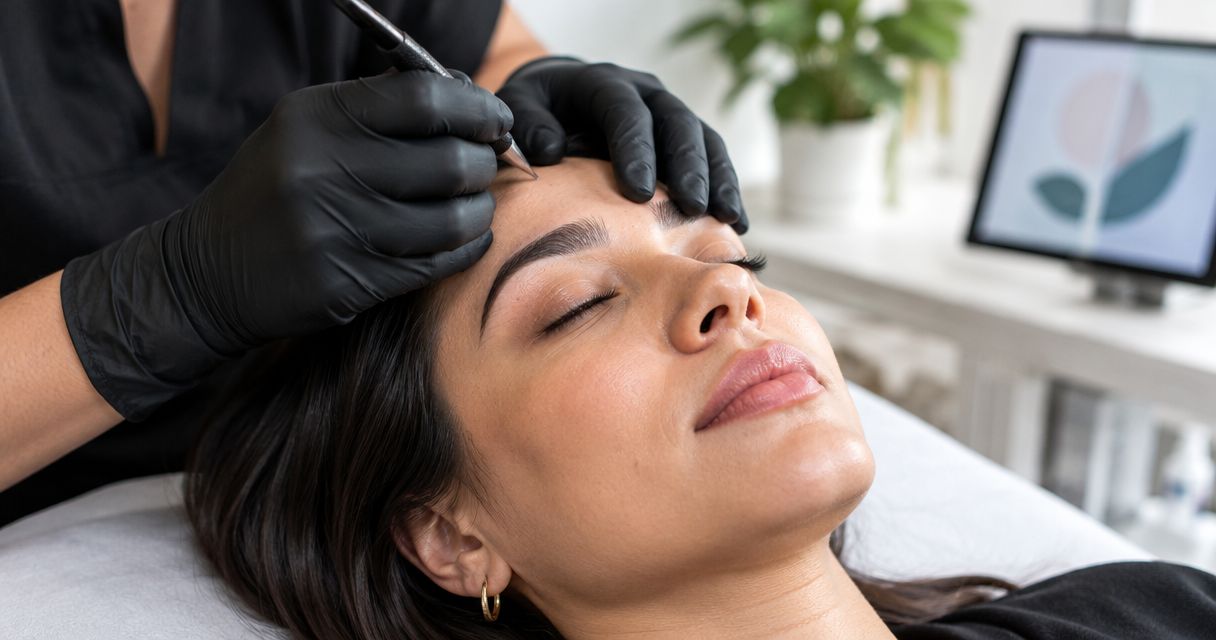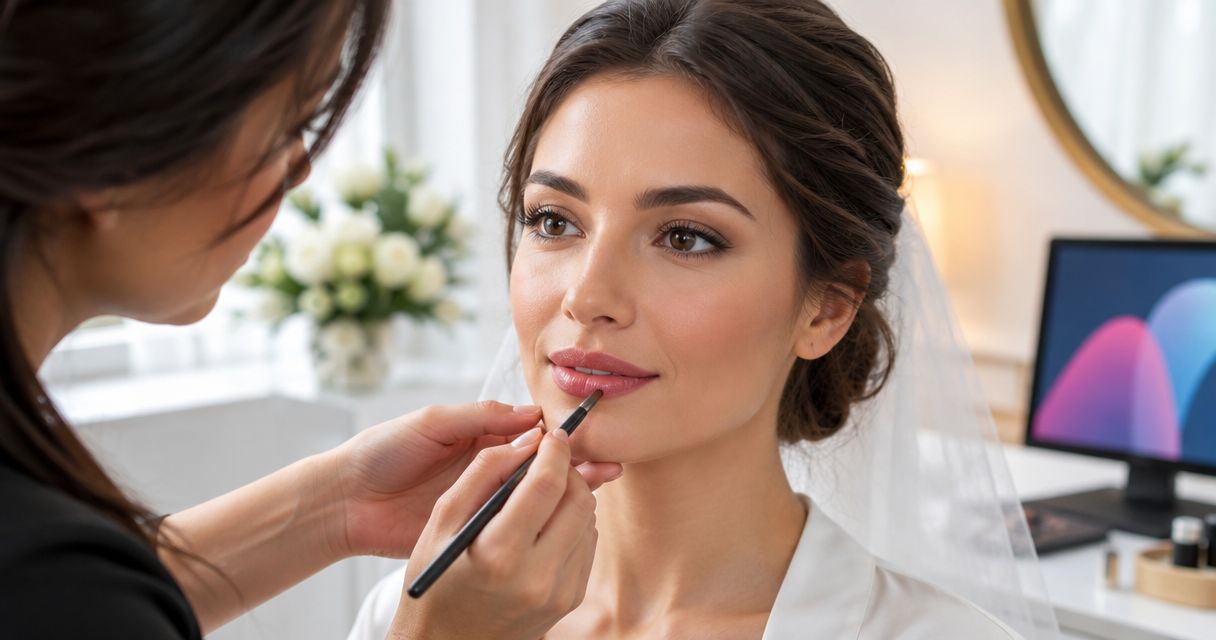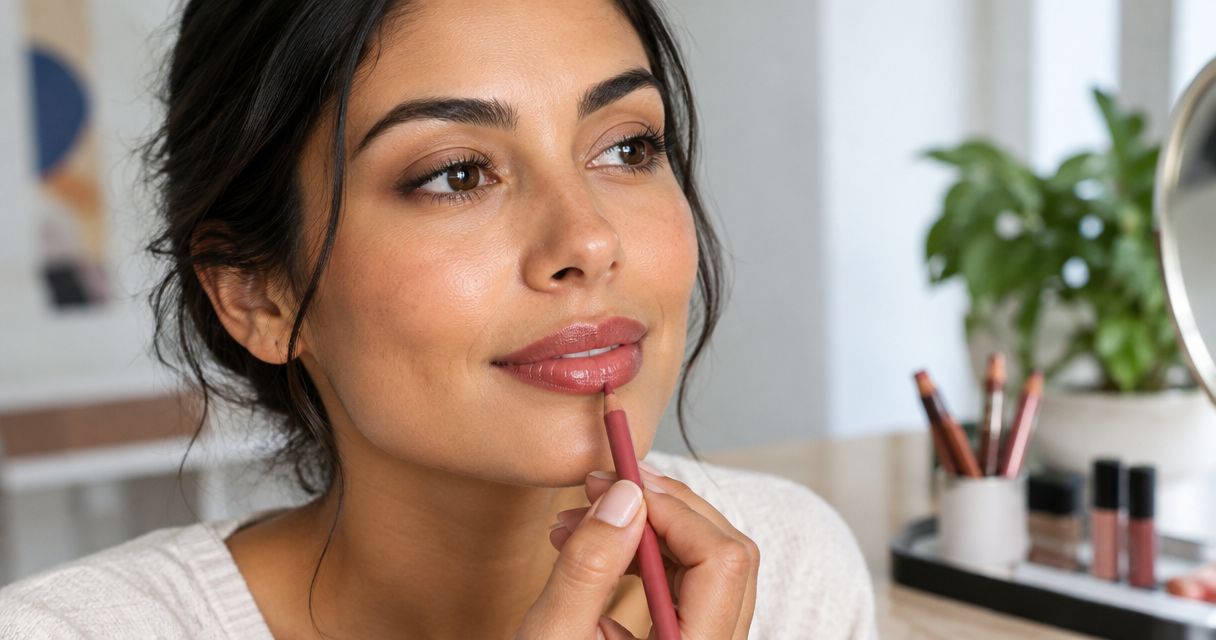
Best overall reference: rosewood. Best for understated definition: muted rose. Best for a peach-led look: peach rose. For permanent lip makeup for olive skin in 2026, use these shade families to describe your preferences—not to predict a tattooed result.
- Rosewood is the best starting reference for permanent lip makeup for olive skin when you want balanced, natural-looking color.
- Muted rose, peach rose, terracotta and berry rose serve different style preferences, not fixed skin-tone rules.
- Essencepermanemtmakeup centers soft, individualized design; bring lip-color references rather than requesting an exact pigment match.
- Your natural lip color belongs in the consultation, alongside your preferred warmth, depth and definition.
Why this matters
Olive skin does not point to one correct lip shade. A skin-tone label leaves out your natural lip color, your preferred makeup style and how much contrast you actually enjoy wearing.
A lipstick reference also serves a different purpose from a permanent makeup plan. Use it to explain a color direction, not as a promise that a procedure will reproduce the same appearance.
Essencepermanemtmakeup is best for prospective permanent makeup clients who prioritize soft, individualized design over a prescribed look. If you are considering an appointment in Lynchburg or a nearby community, start with Essencepermanemtmakeup and ask to discuss your preferences before choosing a shade.
What makes the best lip shade for olive skin?
For your 2026 shortlist, judge a reference shade by how clearly it expresses the look you want. These criteria keep the conversation specific without treating complexion categories as formulas.
- Natural lip color: Include a clear view of your lips without lip color. Your skin tone alone is not the whole reference.
- Color direction: Decide whether you prefer brown-rose, pink-rose, peach, orange-brown or berry notes.
- Depth: Separate the color family from its lightness or darkness. A deep rose and a light rose communicate different preferences.
- Contrast: Consider whether you want your lips to blend into an understated makeup look or become a more noticeable feature.
- Personal fit: Give more weight to shades you enjoy wearing than to a trend photograph or a shade name.
A useful consultation question is: What do I like about this reference—its color, its depth or its definition? Those are separate choices. Naming them gives you a better starting point than asking for the shade that is supposedly best for everyone with olive skin.
Best shade references at a glance
This 2026 comparison ranks color directions by distinct style goals. The names describe familiar color families, not specific tattoo pigments, approved treatment plans or guaranteed outcomes.
| Rank | Shade family | Best for | Standout quality | Key limitation |
|---|---|---|---|---|
| 1 | Rosewood | A balanced brown-and-rose reference | Combines rosy color with brown depth | Some versions look browner than you want |
| 2 | Muted rose | An understated pink-led reference | Keeps the reference soft rather than vivid | Muted versions can look too gray to your eye |
| 3 | Peach rose | A peach-led everyday look | Combines peach warmth with rose | Some versions lean more orange than pink |
| 4 | Soft terracotta | An earthy, warm makeup style | Makes orange-brown warmth the focus | Less suitable as a reference when you dislike orange |
| 5 | Berry rose | A deeper, more noticeable lip reference | Adds a berry direction to rose | Can look stronger than an understated brief requires |
1. Rosewood: best for a balanced natural-color reference
Rosewood is the strongest starting reference when you want both rosy color and brown depth. Here, the name means a brown-rose family, not a particular product or pigment formula.
Its value is flexibility in the conversation. You can point to the rose component, the brown component or the overall depth and say which part you prefer. That makes rosewood a useful first comparison even if you ultimately choose another direction.
Rosewood pros:
- Combines a rose reference with an earthy element.
- Gives you a clear way to discuss brown versus pink preferences.
- Works as a comparison point for both lighter and deeper references.
Rosewood cons:
- The name does not define one exact color.
- A brown-heavy example can miss a pink-led brief.
Best for: You want a balanced reference and do not strongly prefer peach, orange or berry.
Bring an example you like and explain whether the attraction is its softness or its depth. Verdict: Choose rosewood as your first consultation reference, not as a predetermined pigment choice.
2. Muted rose: best for understated pink-led definition
Muted rose puts pink ahead of brown while keeping the reference less vivid than a bright pink. It is a useful direction when your preferred makeup look is quiet and you do not want an earthy or orange-led color.
Pay attention to what “muted” means in your examples. You might like a soft pink but dislike a gray-looking pink; those are different preferences, even when both photographs carry the same shade label.
Muted rose pros:
- Keeps the color discussion focused on pink.
- Offers an alternative to brown-heavy rosewood references.
- Helps express a preference for softness rather than vividness.
Muted rose cons:
- Some examples appear grayer than the look you want.
- A very pale reference does not communicate much about your preferred depth.
Best for: You prefer pink-led color and minimal visual contrast.
Compare a muted rose reference with a rosewood reference without changing the lighting or makeup around them. Verdict: Choose muted rose when pink—not peach or brown—is the feature you want to keep.
3. Peach rose: best for a peach-led everyday look
Peach rose combines peach and pink in the reference color. Start here when the lip colors you already enjoy are peach-led, rather than selecting it simply because someone describes your complexion as warm or olive.
The important distinction is how much peach you want. One reference can read mostly pink with a little peach; another can look distinctly orange. Explain that difference before settling on a color direction.
Peach rose pros:
- Makes a preference for peach easy to communicate.
- Provides a pink-containing alternative to terracotta.
- Helps separate warmth from darkness in your shade discussion.
Peach rose cons:
- Orange-leaning examples can miss a pink-led goal.
- The name alone does not establish the balance between peach and rose.
Best for: You already enjoy peach-toned lip colors and want that preference represented in the consultation.
Bring a reference that shows the balance you mean, rather than asking for warmth in general. Verdict: Choose peach rose for a peach preference, not because olive skin requires it.
4. Soft terracotta: best for an earthy, warm makeup style
Soft terracotta places orange-brown color at the center of the reference. It belongs on your shortlist when those earthy notes are part of your personal style, rather than something you feel obliged to choose for your complexion.
Distinguish terracotta from peach rose by asking what you want to notice first. If the answer is peach-pink softness, return to peach rose. If the answer is earthy warmth, terracotta describes the preference more directly.
Soft terracotta pros:
- Clearly communicates an orange-brown direction.
- Separates earthy preferences from pink-led references.
- Gives a distinct comparison against rosewood.
Soft terracotta cons:
- Does not fit a brief that excludes orange tones.
- A darker example can confuse a warmth preference with a depth preference.
Best for: You deliberately choose earthy, warm lip colors in your everyday makeup.
Use an example you would wear without a full makeup look around it. Verdict: Skip terracotta if you consistently dislike orange-brown lip colors.
5. Berry rose: best for a deeper, more noticeable reference
Berry rose adds a berry direction to a rose-based reference. It gives you a way to express interest in deeper color without treating a bright red or vivid pink as your only alternative to nude shades.
Keep the depth discussion separate from the berry discussion. You might like a berry note but not a dark lip, or like depth without wanting purple-led color.
Berry rose pros:
- Makes a berry preference explicit.
- Offers a distinct alternative to peach and earthy references.
- Helps you discuss a more noticeable lip look.
Berry rose cons:
- Deep examples can exceed a low-contrast brief.
- Purple-heavy references can misrepresent a preference for rose.
Best for: You enjoy a more noticeable lip color and want to discuss berry rather than orange-brown notes.
Show which element you like and which you do not. Verdict: Hold berry rose as a comparison reference if your main goal is barely noticeable color.
Turn shade preferences into a clear consultation brief
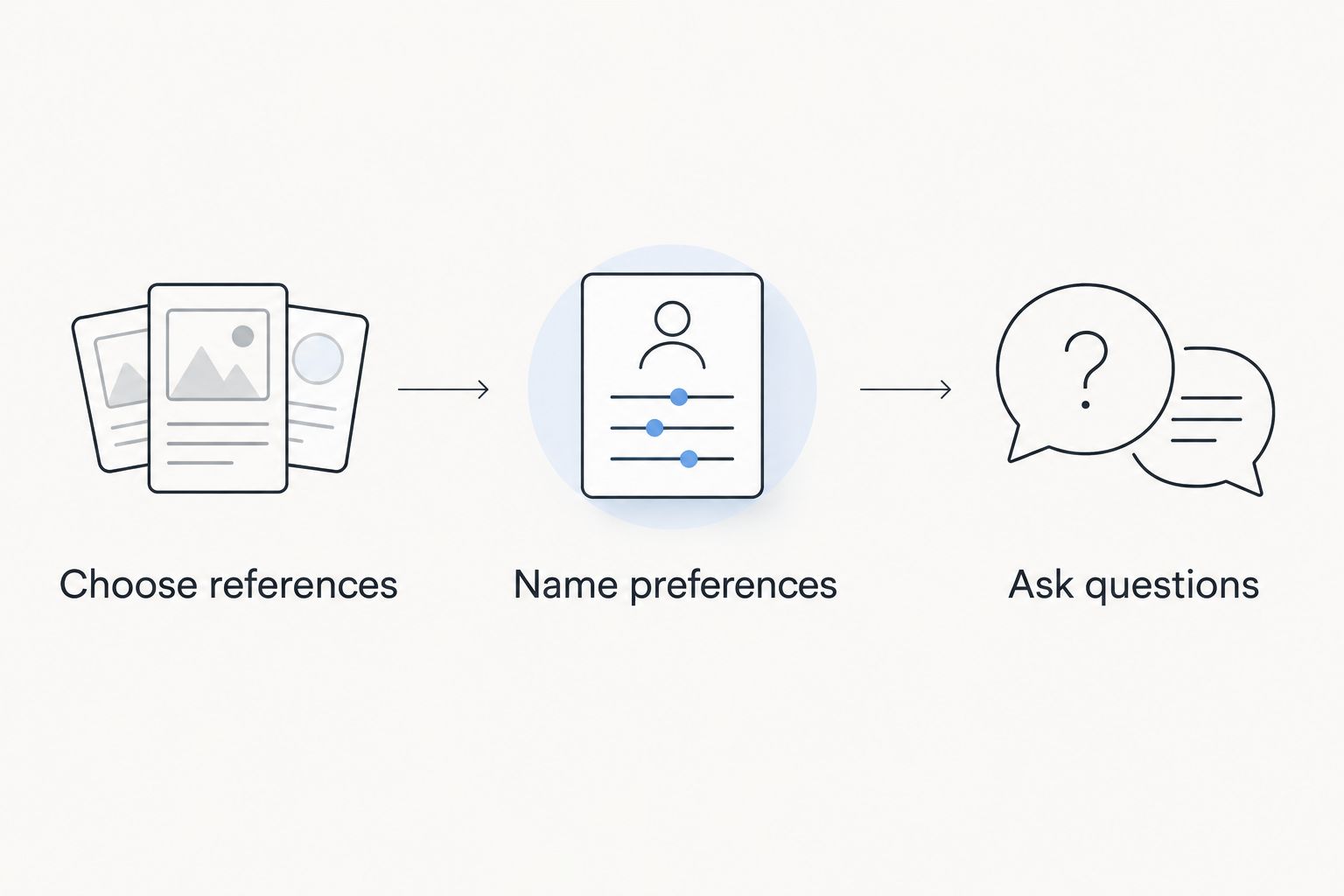
For a 2026 consultation, prepare 3 reference photos, 2 preference notes and 1 main question. This is a suggested preparation checklist, not a requirement for an appointment.
Choose references
Bring one image of a lip color you enjoy, one you dislike and one showing the overall makeup look you prefer. Add a photo of your usual lip product if that communicates your taste more clearly than an inspiration image.
Name preferences
Write two short notes: what you want to keep and what you want to avoid. “I like rose, but not a brown-heavy look” is more useful than “I want the best shade for olive skin.”
Ask questions
Make your main question specific: “How would you approach a soft design around my current lip color and preferences?” Ask what the proposed design involves and what expectations to discuss before requesting an appointment.
Keep your reference selection small enough to explain. A collection of unrelated looks makes it harder to distinguish the qualities you genuinely want from photographs you simply admire.
Discuss your preferred lip look
Share your shade references and ask about an individualized permanent makeup consultation.
How these shade references are ranked
Rosewood leads because its brown-and-rose description provides a balanced starting comparison. The remaining families each answer a different preference: understated pink, peach, earthy warmth or deeper berry color.
This is a style-based shortlist, not a clinical assessment or a ranking of pigment performance. No shade family earns a recommendation solely because you have olive skin. Your consultation needs to address the proposed design and your individual questions separately.
Which shade reference should you choose?
Start with rosewood if you are undecided. Compare it with muted rose if you want less brown, or peach rose if peach is the part you prefer in your everyday lip colors.
At Essencepermanemtmakeup, the stated focus is soft, natural results designed for each person. Treat that as the design brief to discuss—not a reason to copy someone else's lips or expect an exact match to a photograph.
FAQ
What's the best permanent lip makeup shade for olive skin?
Rosewood is the best starting reference in this style-based shortlist because it combines brown and rose. It is not a universal pigment recommendation; use your natural lip color and personal preferences to guide the consultation.
Is rosewood better than peach rose for olive skin?
Rosewood is the clearer reference for a brown-rose preference, while peach rose is the clearer reference for a peach-led preference. Neither is automatically better because your skin is olive.
Can I ask for permanent lip makeup that matches my lipstick?
You can bring your lipstick as a color reference, but an exact match should not be assumed. Explain whether you like its color family, depth or overall softness.
Should I choose a warm shade just because I have olive skin?
No—olive skin alone is not a complete shade brief. Include your natural lip color, preferred makeup style and the colors you dislike in the discussion.
What should I bring to a permanent lip makeup consultation?
Bring a small set of shade references and clear notes about your preferences. Include a lip color you like, one you dislike and an example of your usual makeup style.
How do I ask for a natural-looking lip design?
Describe what natural-looking means to you in terms of color, depth and definition. At Essencepermanemtmakeup, use those preferences to discuss the brand's stated focus on soft, individualized design.
Does a shade guide tell me whether permanent lip makeup is right for me?
No—a shade guide helps you describe aesthetic preferences, not determine personal suitability. Raise questions about the procedure and your individual circumstances directly before making an appointment decision.
One last thing
Your most useful 2026 reference might be the lip color you reach for on an ordinary day—not the photograph you saved for a special occasion. Ask yourself whether you like the lips themselves or the surrounding lighting, makeup and styling.
Choose the reference you can explain. “I like the rose, but I want less depth” gives your consultation a clearer direction than any shade name alone.