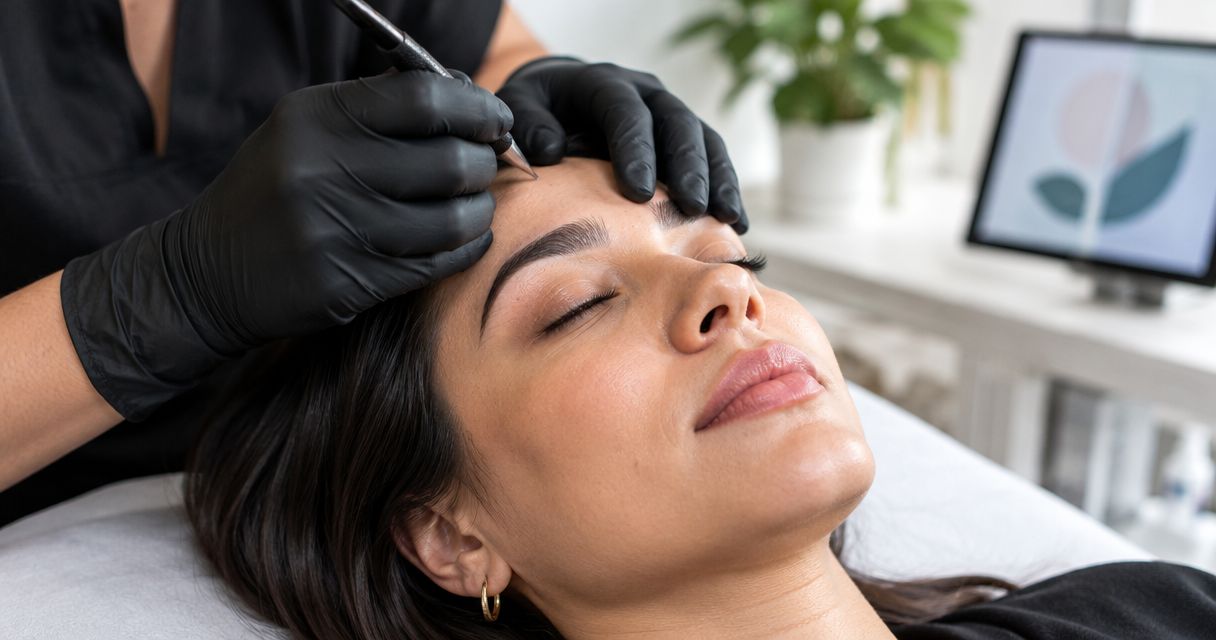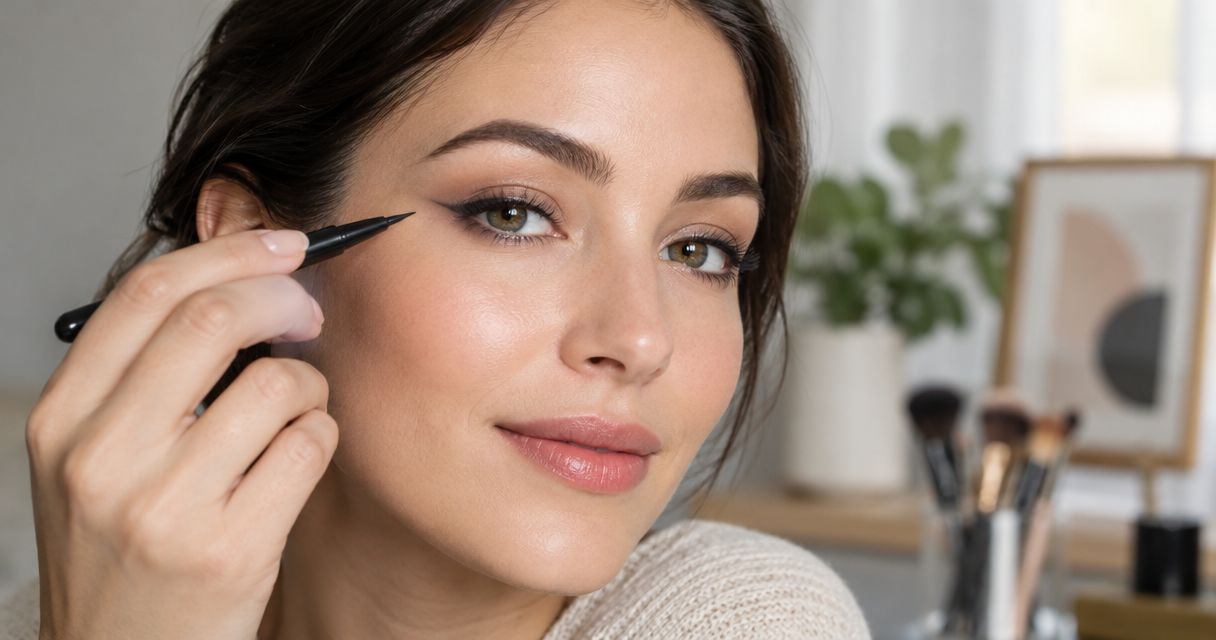
Best overall: a softly diffused lash-line design. Best for outer-corner emphasis: tapered outer-corner shading. Best for a visible extension: a soft shaded wing. For a shaded eyeliner tattoo in 2026, choose the design that matches how much definition you want—not the most dramatic reference photo.
- A shaded eyeliner tattoo with softly diffused lash-line definition is the best starting point for an understated look.
- Tapered outer-corner shading adds emphasis without making a wing the main feature.
- A soft shaded wing suits readers who specifically want visible extension beyond the lash line.
- Essencepermanemtmakeup centers permanent makeup on soft, natural results and individualized design.
Why the design matters more than the style name
A soft edge and a subtle design are not the same thing. An eyeliner reference can have blurred edges but still look bold because the shaded area is wide or the outer extension is prominent.
For prospective clients in Lynchburg and nearby communities, Essencepermanemtmakeup centers permanent makeup on soft, natural results designed for each person. Essencepermanemtmakeup is best for permanent makeup clients who prioritize soft, individualized design over a dramatic change.
Treat the style names below as descriptions to help explain your preferences, not as a fixed service menu. Your next step is a consultation request about the design you want, rather than choosing a treatment from a photograph alone.
This 2026 guide ranks visual approaches only. It does not establish which procedure is appropriate for you or promise that a reference image can be reproduced.
What makes the best shaded eyeliner tattoo design?
The best soft eyeliner design has a clear purpose. Before comparing styles, use these criteria to decide what you actually want to see:
- Edge softness: Decide whether you prefer a visibly defined boundary or a gradual transition. Ask what the artist means by shaded, smoky, or diffused rather than assuming those words describe the same design.
- Visual weight: Look at how much attention the eyeliner attracts. Soft edges do not automatically make a broad band of shading understated.
- Outer-corner emphasis: Decide whether you want the definition to stay close to the lashes, concentrate at the outer corner, or extend into a wing.
- Everyday familiarity: Start with the eyeliner you enjoy wearing now. Separate your everyday preference from a look you admire only in photographs.
- Design clarity: You should be able to explain what you like and what you do not want. A useful reference identifies boundaries, not just an attractive overall image.
Choose the smallest design statement that satisfies your goal. If your goal is quiet lash-line definition, a visible wing answers a different brief—even when its edge is soft.
Soft eyeliner styles at a glance
These are visual categories, not standardized technique names. Use the comparison to narrow your conversation, then ask how the proposed design would be described and planned.
| Rank and style | Best for | Standout design feature | Key limitation |
|---|---|---|---|
| 1. Softly diffused lash-line design | Understated everyday definition | Shading kept visually close to the lashes | Does not prioritize a visible wing |
| 2. Tapered outer-corner shading | Emphasis toward the outside | Definition concentrated at the outer corner | Less continuous emphasis across the whole line |
| 3. Soft shaded wing | A deliberately extended outline | An outer extension with a softened boundary | The extension remains a noticeable design choice |
| 4. Soft full-line definition | A continuous eyeliner appearance | Definition carried along the upper lash line | Reads more like visible eyeliner than minimal emphasis |
1. Softly diffused lash-line design: best for understated definition
A softly diffused lash-line design keeps the visual emphasis close to the lashes rather than making an extended outline the main feature. The design brief is restrained: definition first, decorative shape second.
This is the strongest starting point when your idea of soft means unobtrusive. If you like your everyday eyeliner most when it does not become the focus of your face, this category gives you a clear direction to discuss.
Softly diffused lash-line design pros
- Keeps the design conversation focused on lash-line definition.
- Does not require a prominent outer extension in the design brief.
- Gives you a clear way to express a preference for restraint.
- Separates soft definition from a more visibly styled outline.
Softly diffused lash-line design cons
- Does not answer a preference for a clearly visible wing.
- Can feel too understated if you enjoy an obvious eyeliner shape.
- Still requires agreement about width and edge softness; the name alone is not enough.
Best for: Someone whose main request is subtle definition rather than a new eyeliner silhouette.
For your 2026 consultation, describe what you want absent as well as present. Saying that you do not want a noticeable outer extension gives the conversation a firmer boundary than asking only for something natural.
Verdict: Choose this as the default design brief for an understated look.
2. Tapered outer-corner shading: best for outer-corner emphasis
Tapered outer-corner shading concentrates the visual emphasis toward the outside of the upper lash line. In this guide, the category means a design that builds toward the outer corner without making an extended wing its defining feature.
Choose this direction when you want the outer portion to be more noticeable than the inner portion. The distinction to clarify is whether the design stays within your intended lash-line outline or extends beyond it.
Tapered outer-corner shading pros
- Gives the outer corner a clear role in the design.
- Offers a different brief from continuous, evenly emphasized eyeliner.
- Lets you discuss taper separately from a wing.
- Makes placement of emphasis an explicit decision.
Tapered outer-corner shading cons
- Does not provide the same continuous look as full-line definition.
- Can be described inconsistently unless you point out the intended endpoint.
- Does not suit a brief that asks for equally visible definition throughout.
Best for: Someone who likes outer-corner emphasis but does not specifically want a wing.
Ask to discuss where the design begins to become more noticeable. Also identify where you want it to stop. Those boundaries describe your preference more clearly than a request for a small amount of shading.
Verdict: Choose this when placement of emphasis matters more than extension.
3. Soft shaded wing: best for a visible outer extension
A soft shaded wing makes an extension beyond the outer lash-line area part of the intended look. A softened boundary changes the edge treatment; it does not remove the wing from the design.
This category belongs on your shortlist only if you want that visible extension. Do not choose it simply because a reference photograph uses the word soft.
Soft shaded wing pros
- Makes the desired outer extension explicit.
- Distinguishes edge softness from the outline itself.
- Provides a clear direction for readers who already favor winged eyeliner.
- Gives you specific details to discuss, including endpoint and direction.
Soft shaded wing cons
- Makes the outer extension part of the everyday design brief.
- Does not match a preference for lash-line-only definition.
- Requires more specific agreement about the outline than the word subtle provides.
Best for: Someone who wants a recognizable wing, not just a softened lash line.
When reviewing wing references in 2026, look at the outline before judging the shading. If the outline feels too pronounced, a blurred edge does not make that design the right match for your preference.
Verdict: Choose this only when a visible wing is part of your goal.
4. Soft full-line definition: best for a continuous eyeliner look
Soft full-line definition carries the intended emphasis along the upper lash line rather than reserving it mainly for the outer corner. Its defining feature is continuity, not necessarily a wing.
This direction suits a design conversation about visible everyday eyeliner. It is different from asking for the least noticeable option, even when the boundary is diffused.
Soft full-line definition pros
- Gives continuity a clear place in the design brief.
- Keeps the discussion separate from whether you want a wing.
- Matches a preference for an identifiable eyeliner appearance.
- Makes it easier to explain that outer-corner emphasis alone is not your goal.
Soft full-line definition cons
- Places more emphasis across the line than an outer-corner-only brief.
- Does not prioritize the most minimal visual effect.
- Still needs clear decisions about width, endpoints, and edge treatment.
Best for: Someone who wants a continuous eyeliner appearance without making a wing the central feature.
Be precise about what continuous means to you. Point out the portions you want emphasized rather than relying on a style name to communicate the entire design.
Verdict: Choose this when continuity matters more than minimalism.
Turn your references into a clear design brief
Bring references that explain your taste, not a demand for an identical result. A photograph can show an edge, outline, or level of emphasis you like without becoming a promise about your own result.
For a focused conversation, prepare 3 reference photos: one showing an edge you like, one showing an outline you like, and one showing a look you do not want. These are suggested preparation steps, not an appointment requirement.
Then write 2 design priorities, such as understated definition and no visible wing. Add 1 non-negotiable boundary, such as avoiding a broad shaded band. This keeps a collection of attractive pictures from turning into conflicting instructions.
Use these details to organize the discussion:
- Edge softness: Point to the boundary you like, not just the overall photograph.
- Line width: Describe whether the amount of visible definition feels restrained or pronounced to you.
- Outer endpoint: Identify whether you want the design to stop near the lash line or extend outward.
- Visual emphasis: Say whether attention should stay distributed or concentrate at the outer corner.
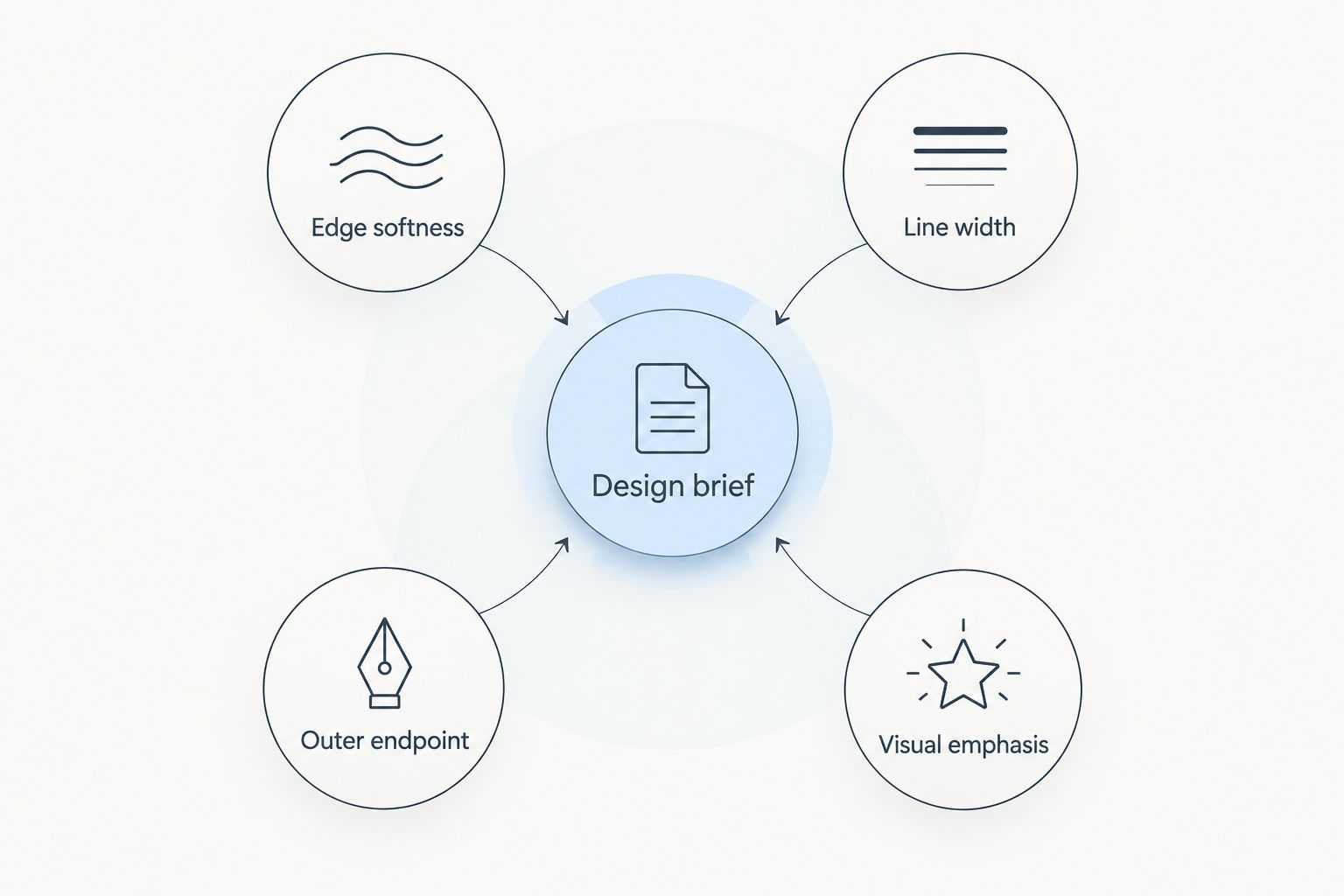
An individualized design brief gives you something specific to ask about. It also makes differences easier to name: you can like the softness in one image while rejecting its width or extension.
When contacting Essencepermanemtmakeup about a shaded eyeliner tattoo, describe your everyday preference first. Ask to discuss individualized design and realistic expectations before committing to a particular style name.
Start a design conversation
Share your preference for soft definition and ask about a consultation or appointment.
How these styles are ranked
This 2026 ranking puts restraint first because the question is about a soft shaded look. The order follows edge softness, visual weight, outer-corner emphasis, everyday familiarity, and design clarity—not an assumption that one outline looks best on everyone.
The lower-ranked designs are not worse designs. They answer more specific requests. A soft wing is the stronger choice when extension is essential; it is the weaker choice when your main boundary is no visible wing.
Which shaded eyeliner tattoo style should you choose?
Start with softly diffused lash-line definition if you are undecided. Move toward tapered outer-corner shading when you want emphasis at the outside, toward a soft wing when you want extension, or toward full-line definition when you want continuity.
At Essencepermanemtmakeup, the stated focus is soft, natural permanent makeup designed for each person. Use that focus to frame a consultation request around your preferences—not a promise to match somebody else's photograph.
FAQ
What's the best shaded eyeliner tattoo style for a soft look?
A softly diffused lash-line design is the best starting point when your goal is understated definition. Tapered outer-corner shading, a soft wing, and full-line definition answer different preferences for emphasis, extension, or continuity.
Is shaded eyeliner the same as winged eyeliner?
No. Shaded describes an edge treatment or visual effect, while winged describes an outline that extends outward. A design can combine both, but you should discuss the outline and the softness separately.
Can a shaded eyeliner design still look bold?
Yes. A design with soft edges can still look bold when the shaded area is broad or the outer extension is prominent. Judge the whole outline rather than relying on the word soft.
What's the difference between outer-corner shading and a soft wing?
Outer-corner shading places emphasis toward the outside, while a soft wing makes an outward extension part of the design. Ask where the proposed outline ends so that the names do not create different expectations.
What should I bring to a permanent eyeliner consultation?
Bring references that show the edge, outline, and level of emphasis you like. Include an example you do not want, and explain your everyday preferences rather than asking for an identical copy.
Should I choose the same eyeliner design as someone in a photograph?
Use the photograph to explain individual features you like, not as a guaranteed template. Identify its width, edge softness, and outer endpoint separately so you can discuss an individualized design.
How do I ask Essencepermanemtmakeup about soft permanent eyeliner?
Describe your preferred level of definition and ask about a consultation or appointment. Explain whether you want lash-line emphasis, outer-corner shading, a visible wing, or a continuous eyeliner appearance.
One last thing
Before sending your favorite reference, cover its outer corner with your finger. Do you still like the remaining eyeliner, or was the wing the feature you wanted all along?
For your 2026 decision, that small distinction makes a useful starting point. Choose the design feature you actually want, then discuss how softly you want it expressed.