Best overall starting point: an individualized brow design. Best for hair-like detail: nano brows. Best for softly shaded definition: powder brows. The best eyebrow tattoo for sparse brows depends on the look you want—not on choosing the most talked-about technique in 2026.
- Choose an eyebrow tattoo for sparse brows by design preference, not technique popularity.
- Nano brows emphasize individual hair-like marks; powder brows emphasize shaded definition.
- Combination brows bring strokes and shading together; microblading uses a manual tool for hair-like marks.
- Essencepermanemtmakeup centers permanent makeup on soft, natural results designed for each person.
Why your preferred brow look comes first
Naturally sparse brows do not all look alike. You might have gaps through the middle, a faint tail, or fine hairs across the entire brow. Start by describing what you want to see in the mirror rather than naming a procedure.
Essencepermanemtmakeup centers permanent makeup on soft, natural results designed for each person. That makes the consultation a place to discuss your preferences, not a commitment to a particular technique.
Essencepermanemtmakeup is best for permanent makeup clients who prioritize soft, natural-looking, individualized design. For prospective clients in Lynchburg and nearby communities, the useful next move is to explain what “natural” means to you: visible hair-like detail, quiet shading, or a little of both.
This 2026 guide compares visual approaches and technique descriptions. It does not determine which procedure is appropriate for you or promise a particular result.
What makes the best eyebrow tattoo for sparse brows?
Judge the proposed design against these criteria before comparing technique names:
- Your preferred finish: Do you want the suggestion of individual hairs, the appearance of brow powder, or both?
- Placement of definition: Identify whether you want attention at the front, through the body, at the tail, or across the brow.
- Relationship to existing hair: Ask how the proposed marks or shading would sit alongside the hairs you already have.
- Shape and expression: Explain which parts of your current shape you like, including any softness or asymmetry you want to retain.
- Clarity of explanation: Ask the artist to explain the proposed design in plain language, including its limits.
A useful comparison separates appearance from method. Nano brows and microblading both describe approaches to hair-like marks, but they do not use the same tool. Powder brows describe a shaded appearance rather than a collection of separate hair-like lines.
Do not let a label replace the design conversation. Ask what the artist means by the term and how that description relates to your requested look.
Eyebrow tattoo options at a glance
The distinctions below describe the intended visual approach, not a guaranteed outcome. Use the table to narrow your questions before a 2026 consultation.
| Option | Best for | Standout feature | Key limitation |
|---|---|---|---|
| Nano brows | Discussing fine, hair-like detail | Machine-created hair-like marks | The technique name alone does not specify density or shape |
| Powder brows | Discussing softly shaded definition | Shading rather than separate strokes | Not the first visual match if you want only individual hair-like marks |
| Combination brows | Discussing strokes plus shading | Both visual elements in one design | You need to understand where each element would go |
| Microblading | Discussing manually created hair-like marks | Hair-like marks made with a manual tool | Similar-looking terminology can obscure differences in method |
Choose the visual direction first; ask about the method second. You can prefer a hair-like finish without deciding between nano brows and microblading before speaking with an artist.
1. Nano brows: best for discussing fine, hair-like detail
Nano brows use a machine to create hair-like tattoo marks. For naturally sparse brows, the design conversation centers on where those marks would appear and how closely spaced you want them to look.
This is a useful starting point if your preferred reference images show individual lines rather than an all-over shaded brow. It is not a promise that tattooed marks will look identical to your existing hairs.
Nano brows pros
- Put individual hair-like detail at the center of the design discussion.
- Let you ask specific questions about stroke direction and spacing.
- Give you a clear visual alternative to a powder-style finish.
Nano brows cons
- “Nano” does not tell you how bold, dense, or softly drawn the design will be.
- A close-up reference image does not show how the whole brow frames a face.
- A preferred appearance does not establish whether the method is appropriate for you.
Best for: Someone who wants to discuss a brow made up visually of fine, separate marks.
Bring a reference showing the amount of visible space you like between the marks. Explain whether you want that detail throughout the brow or only in particular areas; these are different design requests even when both are called nano brows.
Verdict: Hold the technique decision until the proposed stroke pattern and overall shape are clear.
2. Powder brows: best for discussing softly shaded definition
Powder brows use tattooed shading to create a filled-in appearance rather than relying on separate hair-like strokes. The visual reference is brow makeup applied as shading, although the finished appearance is not interchangeable with removable makeup.
If you like the way your brows look with a light application of powder, describe that effect during your consultation. “Soft” still needs explanation: it can refer to the outline, the depth of color, or the transition at the front.
Powder brows pros
- Provide a clear direction for readers who prefer shading over visible strokes.
- Make it easy to discuss lighter-looking fronts and more defined tails.
- Focus the conversation on the amount and placement of filled-in definition.
Powder brows cons
- Shading is not the same visual effect as individual hair-like marks.
- “Powder” does not automatically mean faint or barely noticeable.
- An attractive reference shape is not a reason to copy its outline exactly.
Best for: Someone whose preferred brow look resembles softly applied brow powder.
Describe what you dislike as clearly as what you like. If you do not want a crisp lower edge or a strongly filled front, say so rather than assuming “natural powder brows” communicates those preferences.
Verdict: Hold if you want only hair-like detail; consider the shaded direction if it matches your everyday preference.
3. Combination brows: best for discussing strokes plus shading
Combination brows bring hair-like marks and shading into the same design. The important question is not simply whether both are used, but where each element would appear.
For example, you can ask about a design concept with hair-like detail at the front and shading through other areas. Treat that as a discussion prompt, not a prescribed pattern for every sparse brow.
Combination brows pros
- Bring two distinct visual preferences into one conversation.
- Encourage a specific discussion about the front, body, and tail.
- Give you a way to explain wanting detail without an entirely stroke-based appearance.
Combination brows cons
- More design elements do not automatically create a more natural-looking result.
- The label does not explain how much shading or stroke detail is proposed.
- You need a clear explanation of both elements before deciding.
Best for: Someone who likes visible hair-like detail but also wants to discuss shaded definition.
Ask the artist to describe the design area by area. You should be able to explain back where the strokes would go, where the shading would go, and why that arrangement matches your preference.
Verdict: Hold until the role of each element is clear; skip the assumption that a combination must be better.
4. Microblading: best for discussing manual hair-like marks
Microblading creates hair-like tattoo marks with a manual tool rather than the machine used for nano brows. That distinction describes the method; it does not establish a universal winner for naturally sparse eyebrows.
If you arrived searching for microblading because it is the term you know, keep the conversation open. Explain the look you want before treating that familiar word as a final choice.
Microblading pros
- Offer a clear starting point for discussing manually created hair-like marks.
- Keep individual stroke detail central to the proposed appearance.
- Allow a direct comparison with machine-created hair-like work.
Microblading cons
- Familiarity with the name does not establish that it fits your needs.
- A hair-like description does not specify the finished shape or density.
- The method still requires an individual discussion rather than a keyword-based decision.
Best for: Someone who specifically wants to understand manual hair-stroke work and compare it with machine-created detail.
For your 2026 shortlist, ask the same design questions about microblading that you would ask about nano brows. Keeping those questions consistent makes the comparison more useful than comparing names alone.
Verdict: Hold until you understand the proposed design and the artist’s explanation of the method.
How these options are ranked
The order follows a design conversation: individual hair-like detail, shaded definition, a combination of those appearances, then a comparison with manual hair-stroke work. It is not a ranking of safety, durability, or suitability.
The criteria are visual finish, placement, relationship to existing hair, shape, and clarity. No technique earns the top spot for every person with naturally sparse brows. The best starting point is the option that most clearly expresses what you want to discuss.
Turn your preference into a consultation brief
Before requesting an appointment, write a short description of the brow you want. You do not need technical language; plain observations give the consultation a clearer starting point.
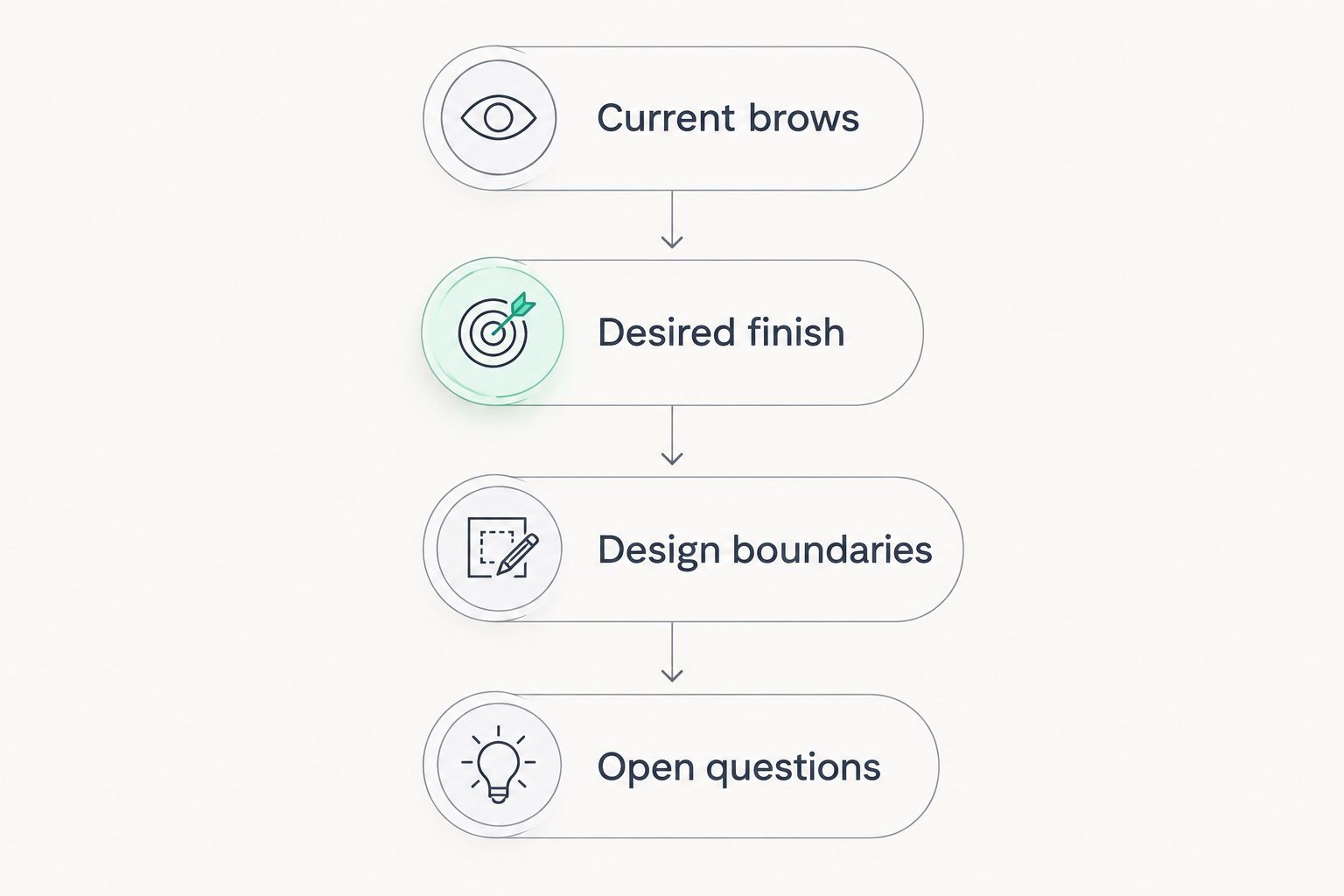
Use this sequence:
- Current brows: Describe what you notice without diagnosing the reason for the sparseness. “The tail is hard to see” is a useful observation.
- Desired finish: Choose the appearance you want to discuss: hair-like detail, shading, or a combination.
- Design boundaries: State what you do not want, such as a sharply outlined front or a shape that feels unlike you.
- Open questions: Ask the artist to explain the proposed approach and what expectations need further discussion.
Bring 2 reference photos if that helps: one showing an appearance you like and one showing an appearance you do not want. The contrast can make your preferences clearer than a collection of similar pictures, but neither photograph is a promised result.
Write your main goal in 1 sentence. Then add 3 design priorities, such as a soft front, a visible tail, and a shape that still feels familiar. These are preparation prompts, not requirements for booking.
Which eyebrow tattoo option should you choose?
If you are undecided, choose a consultation before choosing a technique. Start with hair-like detail versus shaded definition; only then compare how the artist proposes to create that appearance.
Essencepermanemtmakeup’s stated focus is soft, natural permanent makeup designed for each person. Use that focus to frame your request: explain the features you want to retain, the definition you want to discuss, and the look you want to avoid.
For a 2026 appointment request, ask which eyebrow services are currently offered and how to begin the design conversation. This guide compares technique categories; it is not a service menu or an individual recommendation.
Start your brow design conversation
Share the brow appearance you prefer and ask about consultation or appointment options.
FAQ
What’s the best eyebrow tattoo for sparse brows?
The best starting point is an individualized design discussion, not a universal technique winner. Compare hair-like detail, shaded definition, and a combination of both, then ask an artist to explain the proposed approach.
Are nano brows better than microblading for sparse eyebrows?
Neither technique is automatically better for every person with sparse eyebrows. Nano brows use a machine for hair-like marks, while microblading uses a manual tool; ask about the proposed design and method rather than choosing by name alone.
Can powder brows look soft rather than sharply drawn?
A soft appearance is a design goal you can discuss for powder brows, not a result the technique name guarantees. Explain your preferences for the front, outline, and amount of shading.
What are combination brows?
Combination brows include hair-like marks and shading within the same design. Ask where each element would appear and how that arrangement relates to the look you want.
Do I need to know which technique I want before a consultation?
No, you can begin with a description of your preferred appearance. Explain what you like about your current brows, what you want to discuss changing, and which looks you want to avoid.
What should I bring to a brow consultation?
Bring a short description of your goals and reference images that clarify your preferences. Explain which details you like in each image rather than asking for an exact copy.
How do I ask Essencepermanemtmakeup about sparse brows?
Describe your naturally sparse brows and your preference for a soft, individualized design. Ask which eyebrow services are currently offered and how to request a consultation or appointment.
One last thing
“Natural” is a starting word, not a complete design brief. Two people can use it while imagining very different brows: one wants individual hair-like marks, while the other wants a quiet wash of definition.
Before your consultation, finish this sentence: “I want my brows to look like me, with more attention to…” Naming that detail gives the conversation a clearer direction than asking for whichever technique is most popular.